
This article is a translation of the Japanese original. Source titles are listed in their original language. 日本語の原文
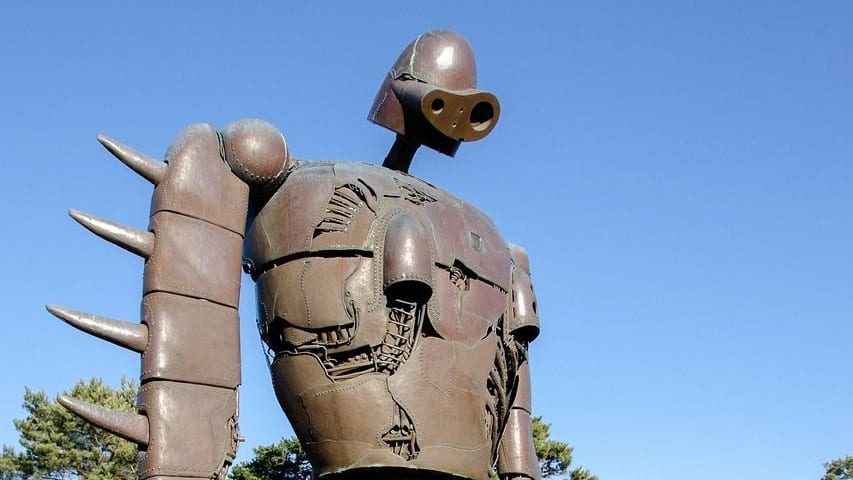
Studio Ghibli began in 1985 on a single floor of a rented building in Kichijoji, Tokyo 23. Its film Spirited Away still holds third place among all films ever released in Japan by box office revenue 4, and it won both the Golden Bear at the Berlin International Film Festival and an Academy Award 2. In 2024 the Cannes Film Festival gave its Honorary Palme d'Or not to an individual but to the studio itself 5.
Yet "many masterpieces" does not fully explain what makes Studio Ghibli remarkable. The conventional wisdom of the Japanese animation industry is to earn money from television series and make the occasional film. Studio Ghibli chose to make only theatrical feature films, and only original ones, a path its own official website calls "extremely unusual" 3. In an industry where paying animators per piece of work was the norm, it also tried to put its animators on salary and double their pay 3.
Based on the "History" and "Chronology" pages of the studio's official website, records from film festivals and industry bodies, and interviews with the people involved, this article lays out the whole picture in nine chapters. It covers not only the achievements but also the strains in the studio's business model and the succession problem that remains unsolved. Facts and the editors' analysis are visually separated.
At a glance
31.68 billion yen
Domestic box office revenue of Spirited Away. Third all-time in Japan by Kogyo Tsushinsha's cumulative ranking (as of October 18, 2026) 4
2 films
Films that won the Academy Award for Best Animated Feature (Spirited Away in 2003, The Boy and the Heron in 2024) 67
About 80%
Share of animation production costs taken up by labor. If wages are doubled by putting staff on salary, production costs rise by nearly as much, the official history explains 3
46.9%
Audience rating of the first television broadcast of Spirited Away (according to Video Research) 3
2024
The Honorary Palme d'Or at the Cannes Film Festival. Reported as the first time it went to anyone other than an individual filmmaker 5
190 people
Number of employees of Studio Ghibli Co., Ltd. (company profile, updated June 2026) 8
Timeline
- 1984Nausicaä of the Valley of the Wind is released 2
- 1985The studio opens in Kichijoji as "Studio Ghibli Co., Ltd." and starts operating as a subsidiary of Tokuma Shoten 28
- 1988My Neighbor Totoro and Grave of the Fireflies are released as a double feature 2
- 1989Kiki's Delivery Service is released. In November the studio puts its staff on full-time employment, creates a trainee system for in-between animators and begins regular recruitment 2
- 1992A new studio building is completed in Koganei and the studio moves in (today's Studio 1) 2
- 1996Parent company Tokuma Shoten forms a business partnership with Disney for film and video 2
- 1997Princess Mononoke is released. In October it surpasses E.T. in distribution revenue and sets a new Japanese record 2
- 2001Spirited Away is released. The Ghibli Museum, Mitaka opens in October, and in November the film surpasses Titanic at the box office to set a new Japanese record 2
- 2002Spirited Away wins the Golden Bear at the Berlin International Film Festival 2
- 2003Spirited Away wins the Academy Award for Best Animated Feature 26
- 2005The studio becomes independent of Tokuma Shoten and restarts as Studio Ghibli Co., Ltd. Hayao Miyazaki receives the Golden Lion for Lifetime Achievement at the Venice International Film Festival 2
- 2013The Wind Rises and The Tale of The Princess Kaguya are released. In September Miyazaki announces his retirement from feature films 23
- 2014In August Toshio Suzuki announces a pause in the production department, which closes at the end of the year. In November Miyazaki receives an Academy Honorary Award 32
- 2017Miyazaki withdraws his retirement. The studio recruits newcomers and begins rebuilding its production department 3
- 2020Netflix announces it will stream 21 titles worldwide except in the United States, Canada and Japan 9
- 2022Ghibli Park opens in Nagakute, Aichi Prefecture (first phase) 210
- 2023The Boy and the Heron is released. In October the studio becomes a subsidiary of Nippon Television 28
- 2024The Boy and the Heron wins the Academy Award for Best Animated Feature. In May Studio Ghibli receives the Honorary Palme d'Or at Cannes 2
Who did what
- Tokuma Shoten → Studio Ghibli: Founded 1985, merged 1997, independent 2005
- Hayao Miyazaki → Studio Ghibli: Director of feature films
- Isao Takahata → Studio Ghibli: Director; set the founding policy
- Toshio Suzuki → Studio Ghibli: Full-time from 1989
- Disney → Studio Ghibli: Partnership with Tokuma Shoten
- Nippon Television → Studio Ghibli: Made a subsidiary
Chapter 1Founding: Seeking a Quality That Television Could Not Reach
Key points of this chapter
- Studio Ghibli was founded in 1985, centered on Tokuma Shoten, on the back of the success of Nausicaä of the Valley of the Wind 3
- It began when Isao Takahata and Hayao Miyazaki concluded that the quality of animation they were after could not be made on television, with its heavy limits on budget and schedule 3
- At first it hired no regular staff; for each film it gathered about 70 people and disbanded them once the film was finished 3
Studio Ghibli began with the success of a single film. Nausicaä of the Valley of the Wind, released in March 1984, was produced by the publisher Tokuma Shoten 23. The official "History" page explains that, prompted by the film's success in both content and box office, Tokuma Shoten took the lead in founding the studio in 1985, while Castle in the Sky was being made 3. The chronology records that in June 1985 the studio opened as "Studio Ghibli Co., Ltd." in Kichijoji, Musashino, Tokyo 2.
The roots of Studio Ghibli lie in Toei Doga and television
Isao Takahata and Hayao Miyazaki, the core of Studio Ghibli, had met long before the founding, at Toei Doga (now Toei Animation) 3. Toei Doga was then making theatrical feature animation, but as times changed the two moved their work to television. The 1974 television series Heidi, Girl of the Alps, directed by Takahata with Miyazaki in charge of scene design, is described by the official history as "one of the pinnacles of television animation" 3.
As they kept working in television, however, the two reached one conclusion: animation of the quality they wanted, which delves deep into human psychology and depicts life's joys and sorrows as they are, could not be made in television, with its heavy constraints on budget and schedule 3. The official "History" says this was the driving force behind founding the studio after Nausicaä of the Valley of the Wind.
Yasuyoshi Tokuma, the decision-maker
Studio Ghibli's first president was Yasuyoshi Tokuma, the president of Tokuma Shoten. According to the official "History," Tokuma rarely showed up at the studio and basically left things to the people on site. Yet it was Tokuma who decided to turn the manga Nausicaä of the Valley of the Wind into a film and who decided to found the studio, and for a film whose distribution ran into difficulty he is said to have gone personally to the distributor to settle the matter 3. The official site goes as far as to say that if any one of Tokuma's contributions had been missing, there would be no Studio Ghibli today.
The company history in the corporate profile likewise states that the studio began operating in June 1985 "as a subsidiary of Tokuma Shoten Co., Ltd., for the purpose of producing animated films by the two directors, Isao Takahata and Hayao Miyazaki" 8. In other words, Studio Ghibli was a vessel that a publisher prepared for two directors.
"If one succeeds, we make the next"
Studio Ghibli was not built, at the outset, to last. The official "History" frankly looks back that nobody imagined it would continue this long. The premise was that if one film succeeded they would make the next, and if it failed it would end there 3.
To reduce risk, therefore, no regular staff were hired. For each film about 70 people were gathered and then disbanded once it was finished. The place was a single floor of a rented building in Kichijoji. The person who set out this policy was Isao Takahata, who had produced Nausicaä of the Valley of the Wind 3. The next film, Castle in the Sky, was also made with Takahata producing and Miyazaki directing. Domestic attendance was 915,000 for Nausicaä of the Valley of the Wind and 775,000 for Castle in the Sky 3.
The name "Ghibli"
"Ghibli" in Studio Ghibli is the Italian word "GHIBLI," meaning the hot wind that blows across the Sahara. It was also the name of an Italian military reconnaissance aircraft in the Second World War, and Miyazaki, an aircraft enthusiast, chose it 11. The official Q&A explains that the name carries the hope of stirring up a hot wind in Japanese animation, and adds that in Italian the correct pronunciation is actually "Gibli" 11.
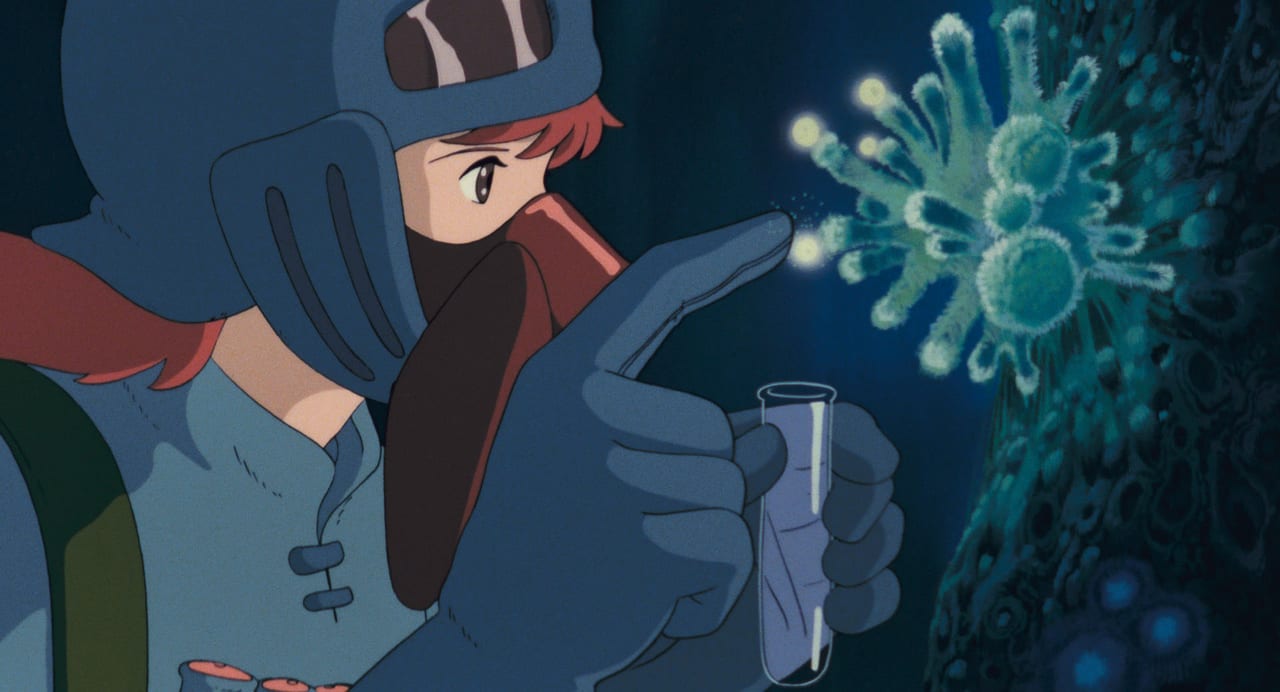
Chapter 2Hayao Miyazaki, Isao Takahata, Toshio Suzuki: Three Divisions of Labor
Key points of this chapter
- Studio Ghibli has officially upheld a "director-centered principle," placing the two directors, Miyazaki and Takahata, at its core 3
- Isao Takahata was both a director and the practical thinker who decided the method used at the founding 3
- Toshio Suzuki went from editor-in-chief of the magazine Animage to full-time producer of the studio in 1989 312
When people talk about Studio Ghibli, the names of Hayao Miyazaki, Isao Takahata and Toshio Suzuki always appear together. But the three did not do the same job. The official "History" describes the studio's stance as making films with two directors under a "director-centered principle" 3. On top of that, it can be read that Suzuki's role was to arrange the conditions under which the two directors could keep making films. This chapter checks the division of labor among the three against primary sources.
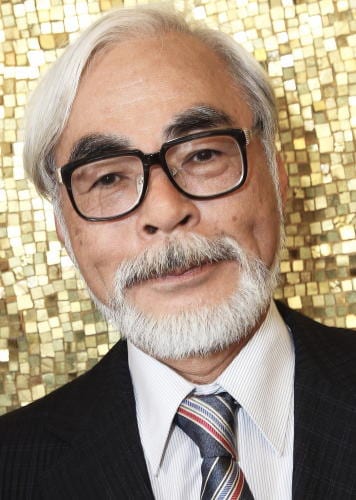


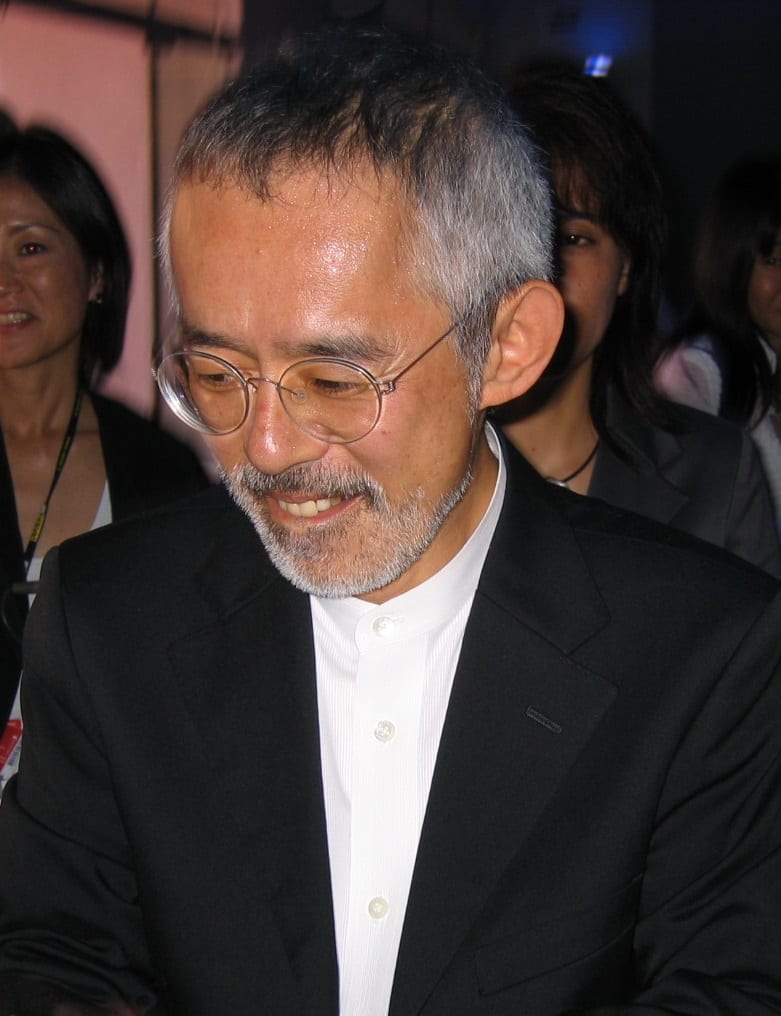

Hayao Miyazaki: the director who draws both films and buildings
Hayao Miyazaki directed most of Studio Ghibli's feature films. His work is not limited to film. The new studio in Koganei in 1992 was one for which Miyazaki drew the plans himself while making Porco Rosso, meeting with the construction company and even choosing material samples 3. The Ghibli Museum, Mitaka, which opened in 2001, is also his design, and the official history calls it a feat of "making two works at the same time," Spirited Away and the museum 3.


The official "History" contains a striking description of Miyazaki's way of working. When things are at their hardest, it says, Miyazaki habitually brings up an even bigger challenge and tries to break through the problems he is carrying along with it 3. The construction of the new studio was something Miyazaki proposed precisely when Only Yesterday and Porco Rosso overlapped. His reasoning was that to gather and train excellent people you need a "vessel," not temporary lodgings.
Miyazaki announced his retirement from feature films in September 2013 3, later withdrew it saying that he had "found a subject worth making" 3, and released The Boy and the Heron in 2023 2. In the company profile updated in June 2026, his title is Director and Honorary Chairman 8.
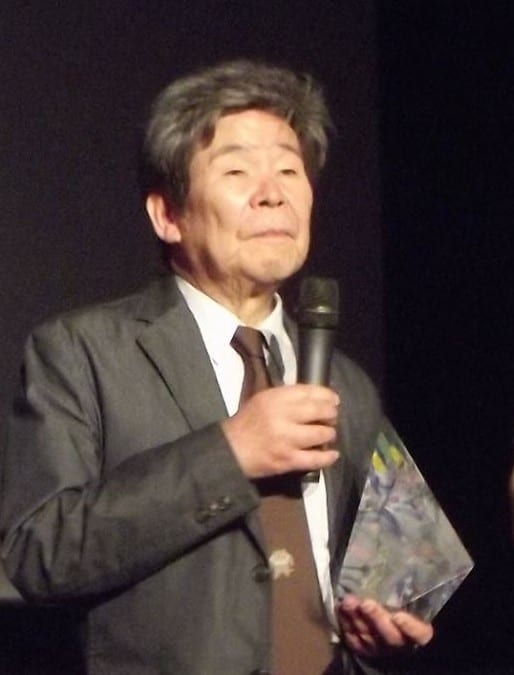
Isao Takahata: a director who also built the system
Isao Takahata is the other pillar, a director of Grave of the Fireflies, Only Yesterday, Pom Poko, The Tale of The Princess Kaguya and more. At the same time, he was the person who first designed the studio's system. Takahata was the producer of Nausicaä of the Valley of the Wind, and the official history says the "practical ability" he showed then was also put to use when the studio was founded. It was Takahata who set out the initial policy of gathering staff for each film and disbanding them once it was completed 3.
Takahata also created a place for training later generations. In 1995 he opened an animation direction course, the "Higashi-Koganei Village School," and served as its head himself 2. He died in April 2018 at the age of 82 2.
Toshio Suzuki: from magazine editor to producer
Toshio Suzuki was born in Nagoya in 1948 and joined Tokuma Shoten in 1972. In 1978 he took part in launching the animation magazine Animage and later served as its editor-in-chief 12. According to the official "History," Suzuki has been involved in film production alongside his editorial work ever since Tokuma Shoten began producing Nausicaä of the Valley of the Wind in 1983, and he became full-time at the studio in 1989 3.
In a 2016 interview Suzuki said he had known both directors since 1978. The article introduces him as the producer of all of Studio Ghibli's theatrical films up to The Wind Rises, as well as the Ghibli Museum, Mitaka 12. When the studio became independent of Tokuma Shoten in 2005 he became its Representative Director and President 3, and in the company profile updated in June 2026 he is Representative Director and Chairman 8.
A scene around the construction of the new studio shows well how Suzuki made decisions. Tohru Hara, then a managing director, was strongly opposed because there was no money. Suzuki thought it was reckless but figured "somehow it will work out," and Yasuyoshi Tokuma pushed him forward by saying "the bank has all the money you need" 3. Hara left the studio saying "we think differently."
Chapter 3Behind the Major Films: From Weak Openings to Japanese Records
Key points of this chapter
- Not every Studio Ghibli film was a hit from the start. The opening results of My Neighbor Totoro and Grave of the Fireflies were "so-so" 3
- The official history analyzes that those two films built a broad fan base through television broadcasts and video, supporting the success that followed from Kiki's Delivery Service onward 3
- Princess Mononoke and Spirited Away each broke the Japanese film records of their day 2
The history of Studio Ghibli's films tends to be told as a string of hits. But the official "History" shows that some films struggled on release, and that success built up as the reputation of each film lifted the next.
| Film | Released | Director | Domestic result |
|---|---|---|---|
| Nausicaä of the Valley of the Wind | 1984 | Hayao Miyazaki | Attendance of 915,000 3 |
| Castle in the Sky | 1986 | Hayao Miyazaki | Attendance of 775,000 3 |
| My Neighbor Totoro / Grave of the Fireflies | 1988 | Hayao Miyazaki / Isao Takahata | Double feature. The official history calls the opening results "so-so" 3 |
| Kiki's Delivery Service | 1989 | Hayao Miyazaki | Distribution revenue of 2.15 billion yen; No. 1 Japanese film of 1989 13 |
| Princess Mononoke | 1997 | Hayao Miyazaki | Distribution revenue of 11.76 billion yen (1997) 14 / cumulative box office revenue of 21.46 billion yen 4 |
| Spirited Away | 2001 | Hayao Miyazaki | Cumulative box office revenue of 31.68 billion yen (third all-time) 4 |
| Howl's Moving Castle | 2004 | Hayao Miyazaki | Box office revenue of 19.6 billion yen 4 |
| Ponyo | 2008 | Hayao Miyazaki | Box office revenue of 15.5 billion yen 4 |
| The Wind Rises | 2013 | Hayao Miyazaki | Box office revenue of 12.02 billion yen 4 |
| The Tale of The Princess Kaguya | 2013 | Isao Takahata | Box office revenue of 2.5 billion yen; attendance of 2 million 3 |
| The Boy and the Heron | 2023 | Hayao Miyazaki | Box office revenue of 9.4 billion yen 4 |
Cumulative box office figures are as of October 18, 2026, from Kogyo Tsushinsha's all-time top 100. Distribution revenue is box office revenue minus the theaters' share; the statistics of the Motion Picture Producers Association of Japan used this measure through 1999.
My Neighbor Totoro and Grave of the Fireflies: the "recklessness" of making them together
In April 1988, Studio Ghibli released Hayao Miyazaki's My Neighbor Totoro and Isao Takahata's Grave of the Fireflies as a double feature 2. A simultaneous release of a Miyazaki film and a Takahata film has happened only that once, before or since. The official history calls the plan to make two feature films at once, without lowering quality, "nothing but recklessness" 3. The chronology also records that the studio set up a second studio in 1987 in order to make the two features at the same time 2.
Partly because the double feature did not open in the summer holiday season, the opening results were "so-so." Even so, the films were highly rated: My Neighbor Totoro swept that year's Japanese film awards, live-action included, and Grave of the Fireflies was acclaimed as a literary film 3.
There was also an unexpected by-product: the Totoro plush toy. According to the official history, the plush was commercialized two full years after the film's release, as a result of a staff member at a plush-toy maker falling in love with the film and pressing for it. Its sales came to cover part of the production costs, and Totoro became the company's emblem 3. The official site also writes that the studio has never decided or changed the content of a film for the sake of merchandise.
Kiki's Delivery Service: the first big hit
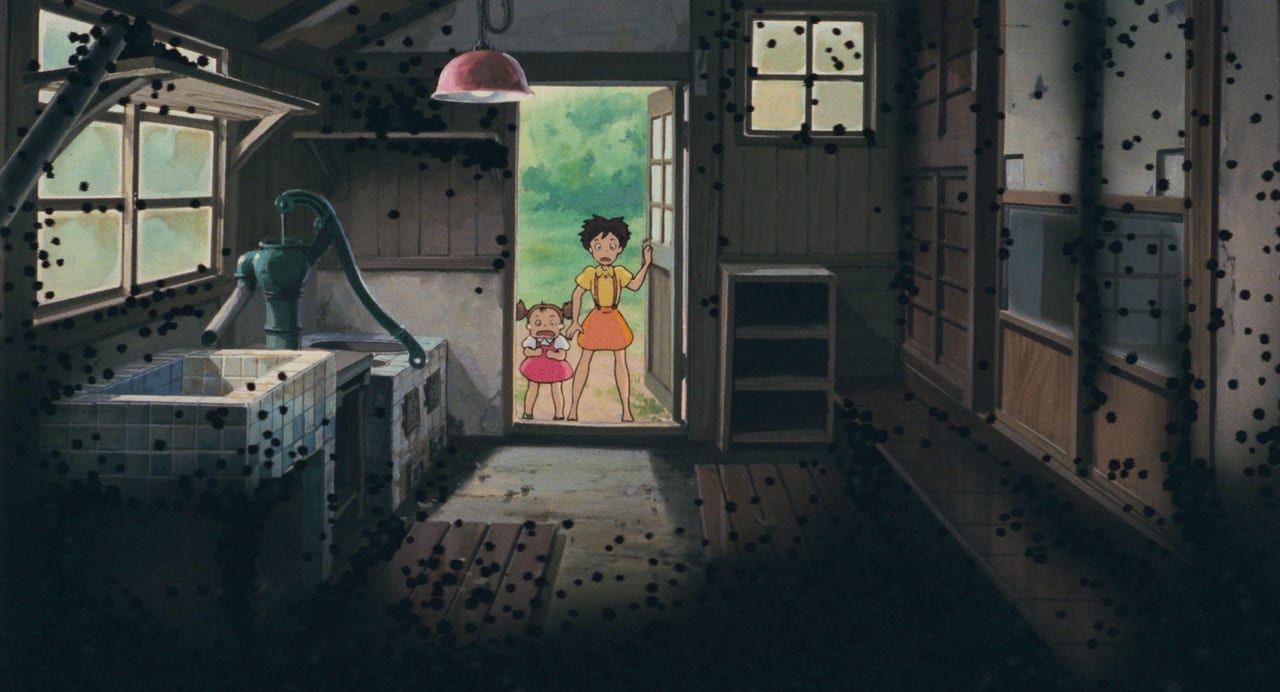
The first Studio Ghibli film to achieve a major commercial success was Kiki's Delivery Service in 1989. 2.64 million people went to theaters, and it was the No. 1 Japanese film of the year 3. In the statistics of the Motion Picture Producers Association of Japan as well, it was the top Japanese film of 1989, with distribution revenue of 2.15 billion yen 13.
The official history ties this success to the two earlier films. My Neighbor Totoro and Grave of the Fireflies did not do well when released, but through later video sales and television broadcasts they opened up a broad fan base beyond anime fans. With that groundwork, Kiki's Delivery Service succeeded, and from then on a "happy chain" arose in which the creative success of one film supported the commercial success of the next 3.
Princess Mononoke: an adventure thought unrecoverable
Princess Mononoke in 1997 was an adventure from the very planning stage. The official history lists a period drama that was out of fashion, a budget of 2 billion yen, double the usual, and a rival that summer in The Lost World: Jurassic Park, and writes that "by ordinary reasoning, it could not be recouped" 3. Here too it was Yasuyoshi Tokuma who gave the final go-ahead.
The result far exceeded expectations. According to the chronology, in October 1997 Princess Mononoke surpassed E.T. in distribution revenue and set a new Japanese record 2. In the statistics of the Motion Picture Producers Association of Japan, its 1997 distribution revenue was 11.76 billion yen 14. Its cumulative box office revenue, as tallied by Kogyo Tsushinsha, is 21.46 billion yen, still seventh all-time as of October 18, 2026 4.
Spirited Away: to the summit of Japanese film history
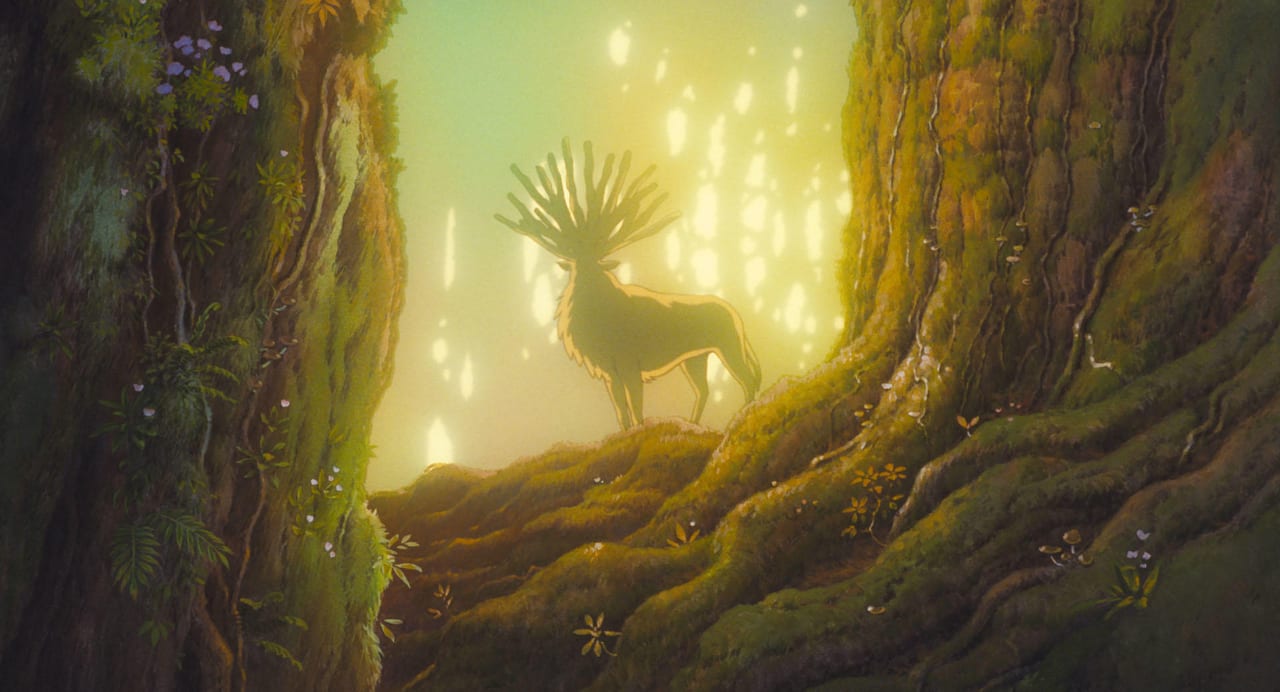
Spirited Away, released in July 2001, rewrote all of Princess Mononoke's records. The official "History" gives the figures at the time of release as 23.8 million admissions and box office revenue of 30.8 billion yen 3. The chronology says that in November 2001 it surpassed Titanic at the box office and set a new Japanese record 2. Against the 30.8 billion yen at the time of release, the current cumulative figure from Kogyo Tsushinsha is 31.68 billion yen, third all-time 4.
The records continued outside theaters too. The video released the following year shipped 5.5 million copies across DVD and VHS combined, and the first television broadcast drew a rating of 46.9% (according to Video Research). The official history stresses how large 5.5 million is in a market where 100,000 copies counts as a hit 3.
With this success Studio Ghibli came to be treated as "a standard-bearer of the Japanese content business." The official history says the studio felt "bewildered" at being treated that way, and acknowledges that the collaboration among its investors, such as Nippon Television, Disney, Mitsubishi Corporation, Dentsu and Hakuhodo, and sponsors such as Lawson and the Yomiuri Shimbun, the so-called "Team Suzuki," contributed greatly to the box office 3.
From Howl's Moving Castle to The Boy and the Heron
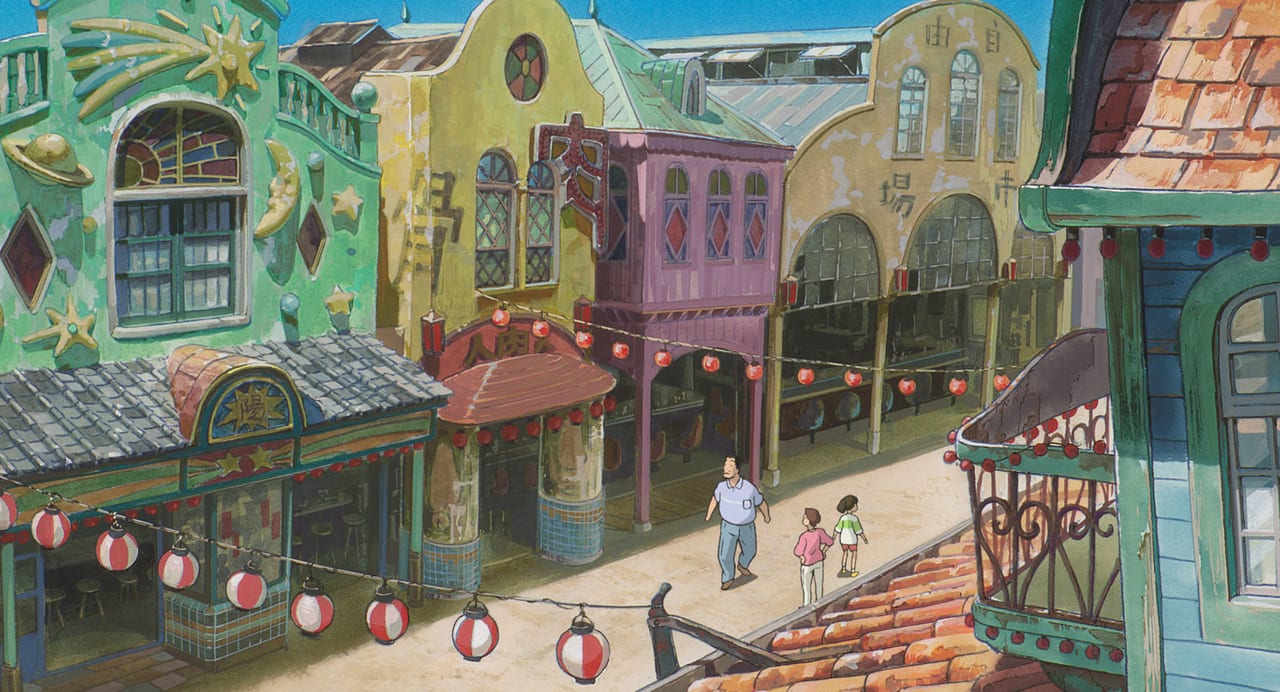
With Howl's Moving Castle in 2004, the publicity approach changed greatly. In what the official history calls "publicity without publicity," full-scale promotion was confined to the month before release, the director stopped talking about the film, and television airing of trailers was also skipped 3. The thinking was that showing too much in advance leaves audiences feeling "as if they had already seen it." Its box office revenue was 19.6 billion yen 4.
The film that pushed this idea to the limit was The Boy and the Heron in 2023. According to a US trade magazine, there was no trailer or television commercial before release, and no announcement of the plot or cast. Even so, its opening weekend box office in Japan was 1.83 billion yen, reported as the biggest opening in Studio Ghibli history 15. Its cumulative total is 9.4 billion yen 4.
In the films in between, too, Studio Ghibli brought a different challenge each time. Ponyo in 2008, according to the official history, was a film that "completely eliminated computer-generated expression" and stuck to hand drawing, and its box office revenue was 15.5 billion yen 3. In 2013 Miyazaki's The Wind Rises and Takahata's The Tale of The Princess Kaguya were released, the latter Takahata's first new film in 14 years 3.
Chapter 4Drawing and Technique: A Studio That Runs Against the Division of Labor
Key points of this chapter
- Studio Ghibli keeps every department in-house, from key animation to art, ink-and-paint and photography. The official history calls this the "completely opposite direction" from an industry that has divided its work ever more finely 3
- Digitization began with three CG cuts in Pom Poko, and after Princess Mononoke the studio switched ink-and-paint and photography entirely to digital 3
- The trigger for the switch was worry over the supply of materials such as cels. A studio representative also cites the pursuit of further expression as a reason 316
The images in Studio Ghibli's films are known for their fine detail. What supported that detail was not only individual talent but the way the studio itself was set up.
Studio Ghibli gathered "every department in one place"
Japanese animation production has advanced toward a division of labor in which processes such as key animation, background art, ink-and-paint (coloring the drawings) and photography (filming them with a camera) are ordered from separate companies. Studio Ghibli chose the opposite. In 1993 it installed two large computer-controlled camera stands and created a photography department, becoming a studio with every department from key animation to art, ink-and-paint and photography 32. The official history calls this the "completely opposite direction" from a Japanese animation industry with an extreme division of labor, and explains the reason: working closely together in the same place and carrying the work through consistently leads to better quality 3.
At the time the official "History" was written, the studio had about 100 production staff and 50 administrative staff, 150 employees in all. Two-thirds were involved in work that creates the images 3. The official site acknowledges that handling almost all the work needed for film production with its own employees is a feature that supports the quality of its films and, at the same time, a weakness that raises costs. We return to this point in Chapters 5 and 9.
The signature of background art
One of the elements that shape the impression of Studio Ghibli's imagery is its background art. Kazuo Oga, an art director who grew up in Akita, served as art director of My Neighbor Totoro, Only Yesterday, Pom Poko and Princess Mononoke 17. The "Kazuo Oga Exhibition" held at the Museum of Contemporary Art Tokyo in 2007 drew 290,000 visitors and set the museum's record for daily attendance 32. The fact that people gathered not for the name of a director but for the name of the art director who paints the backgrounds shows well where the value of Studio Ghibli's imagery lies.
The path to digitization
Studio Ghibli's digitization proceeded gradually. According to the official "History," CG was first used in Pom Poko in 1994, in just three cuts 3. A CG room was opened in June 1995 2, and in Whisper of the Heart the same year the studio adopted "digital compositing" 3.
Princess Mononoke was the first to use digital paint (coloring on computers) 3. The production diary from March 1997 that remains on the official site also shows records of cuts handled by the CG staff and of digital processing added to background animation cuts 18.
After Princess Mononoke was completed, Studio Ghibli switched its ink-and-paint and photography departments entirely to digital. The first film made fully digitally from start to finish was My Neighbors the Yamadas in 1999 3. Drawings and background paintings were still made by hand as before, and the processes after that were done on computers.
What matters here is the reason for the switch. The official site writes that the studio did not believe digitization was absolutely better, but took the step because worries had arisen about the supply of materials such as cels 3. A report on a 2006 talk in which a Studio Ghibli representative explained the production environment also cites the growing difficulty of obtaining good-quality cels and paint as the reason, and adds that the move was also a search for further visual expression. Cost reduction is said not to have been the primary aim 16.
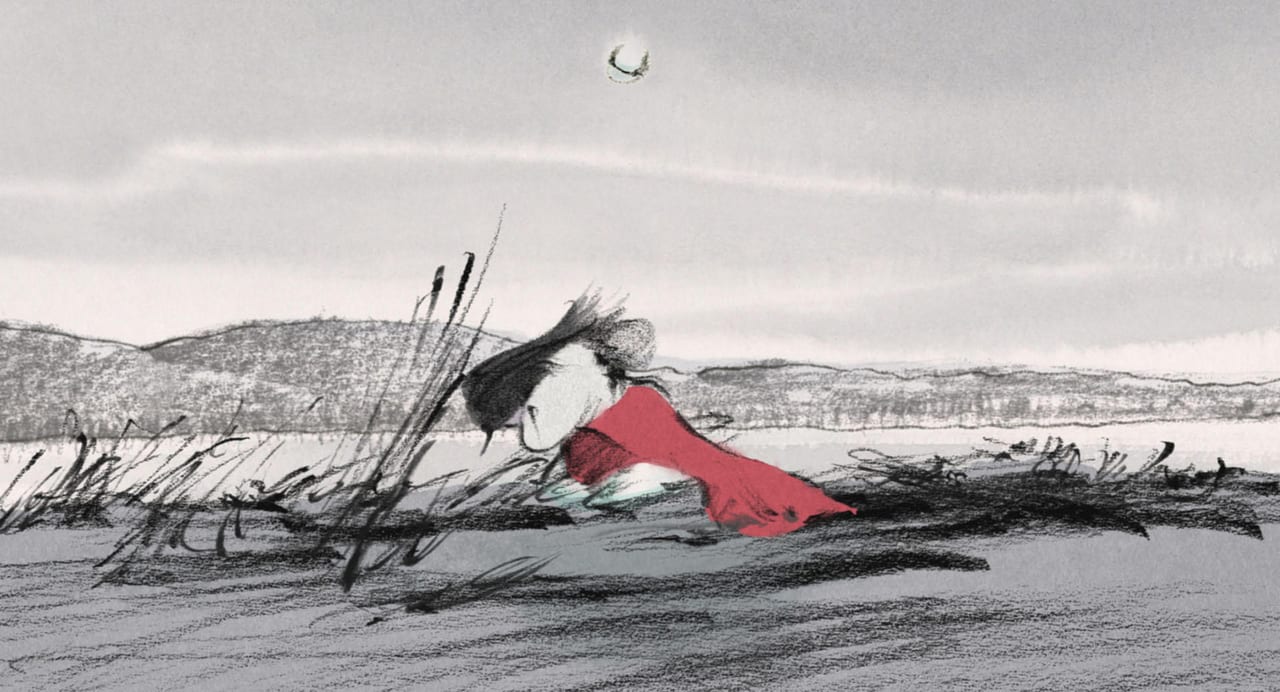
A return to hand drawing and a challenge in CG
Even after digitization, Studio Ghibli has not pushed its technology in only one direction. The CG department created after Princess Mononoke was renamed the "Digital Animation Department" and contributed to production up to Tales from Earthsea, but afterward it was scaled down, partly because of a change in drawing policy, and absorbed into the imaging department 3. Ponyo in 2008, according to the official history, eliminated computer-generated expression and stuck to hand drawing 3.
On the other hand, after his 2013 retirement press conference, Miyazaki took on CG expression for the first time, together with young staff, in the Ghibli Museum short Boro the Caterpillar 3. In 2020 Earwig and the Witch, Studio Ghibli's first fully 3DCG feature, was broadcast on NHK 2.
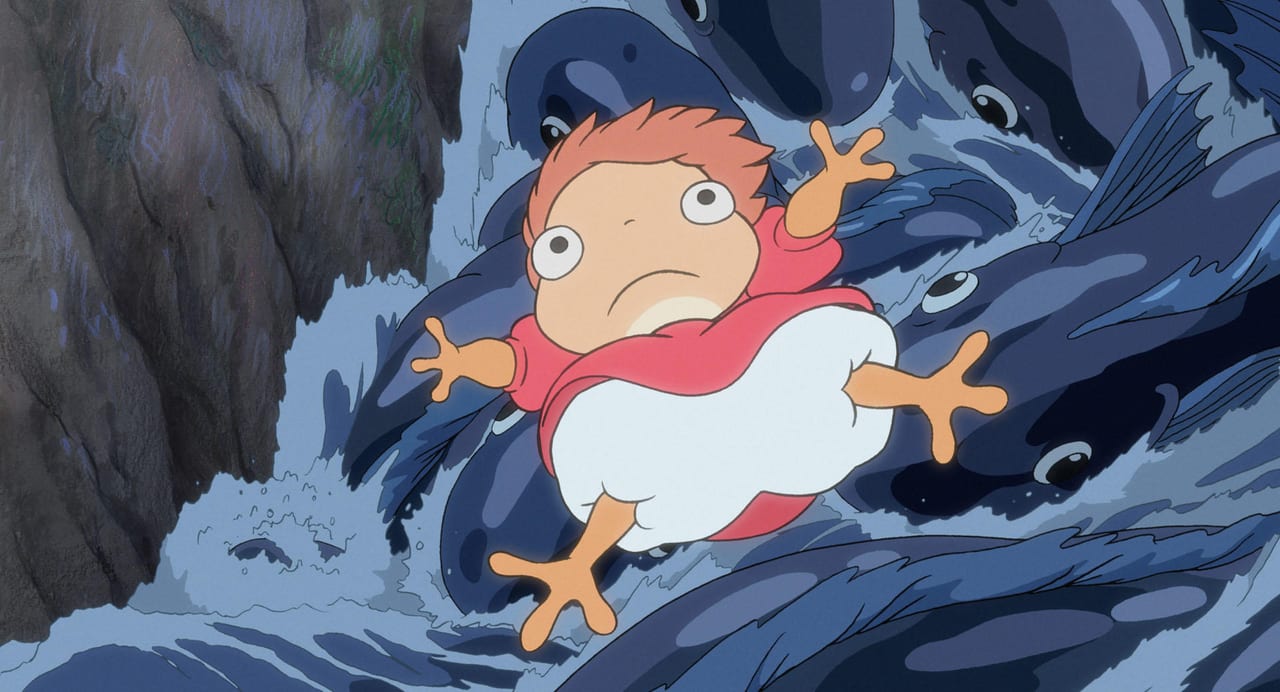
Chapter 5Production and Management: The "Fate of Having to Keep Making Films" That Salaried Staff Created
Key points of this chapter
- In 1989 Studio Ghibli ended piece-rate pay, put its staff on salary, and set goals of doubling wages and regularly hiring newcomers 32
- About 80% of animation production costs are labor, so doubling wages nearly doubles production costs. The studio therefore had no choice but to keep making films and recoup the costs through publicity 3
- The studio paused its production department in 2014 and rebuilt it in 2017. In 2023, citing the succession problem, it became a subsidiary of Nippon Television 319
What most sets Studio Ghibli apart from other studios may be its management more than its films. The official "History" calls this turn in management "the start of Ghibli's second period" 3.
From piece rates to salaried employees
Kiki's Delivery Service in 1989 was a big hit, but behind it the people involved were having a serious discussion. It was about what kind of company Studio Ghibli should become, specifically how to treat its staff and how to recruit and train newcomers 3.
In Japanese animation at the time, a "piece-rate system" that set wages per drawing made and per drawing painted was normal, and Studio Ghibli was no different. As a result, the official history writes, the staff's income around the time of Kiki's Delivery Service was about half that of an ordinary salaried worker 3. Hayao Miyazaki made two proposals here. One was to make the staff employees on fixed salaries and aim to double wages. The other was to recruit newcomers regularly and train them 3.
In November 1989, Studio Ghibli put its staff on full-time employment, created a trainee system for in-between animators and began hiring newcomers every year 2. The next film, Only Yesterday (1991), was the No. 1 Japanese film of that year, and the official history writes that the two goals Miyazaki had set, doubled wages and newcomer recruitment, were achieved 3.
Most of the production cost is labor
Putting staff on salary came at a price. According to the official "History," about 80% of animation production costs are labor. If wages are doubled, production costs automatically nearly double 3.
Tohru Hara, then the studio's head, declared at this point that "Ghibli is 3H." The three Hs stand for high cost, high risk and high return. The official site adds that even if there were a high return, it would be invested straight into the next film, so nothing at all would be left in hand 3.
The official site then describes the essence of this choice. Having employees means paying salaries every month, and so Studio Ghibli drove itself into a situation where it had no choice but to keep making films 3.
Making publicity part of the work
The official "History" lists three reasons for Studio Ghibli's box office success: the high level of finish of its films, the track record built up over time, and large-scale publicity carried out under a firm policy 3. Starting from the premise that the Japanese watch on average only one film a year, the studio aims to turn a film into an event, "the talk of the summer that you absolutely must see." To do so, it has not spent heavily on advertising but has concentrated on low-cost tie-ups and media exposure, with the director and producer traveling to cities across the country to be covered by local media 3.
Independence, the museum, and diversification
In June 1997 Studio Ghibli merged with its parent company Tokuma Shoten, and in April 2005 it separated and became independent, restarting as Studio Ghibli Co., Ltd. 82.
Its businesses beyond films also expanded. The Ghibli Museum, Mitaka, which opened in October 2001, is operated under a foundation established with Mitaka City, Tokuma Shoten and Nippon Television Network as its main bodies 20. At the time the official "History" was written, 700,000 people a year visited, on a fully reservation-only basis 3. As for producing television commercials, the official site says the studio takes such work only to the extent that it does not affect its core business, while admitting that the fees are now an important source of income for running the studio 3. In November 2022, Ghibli Park opened in the Expo 2005 Aichi Commemorative Park in Nagakute, Aichi Prefecture 210.
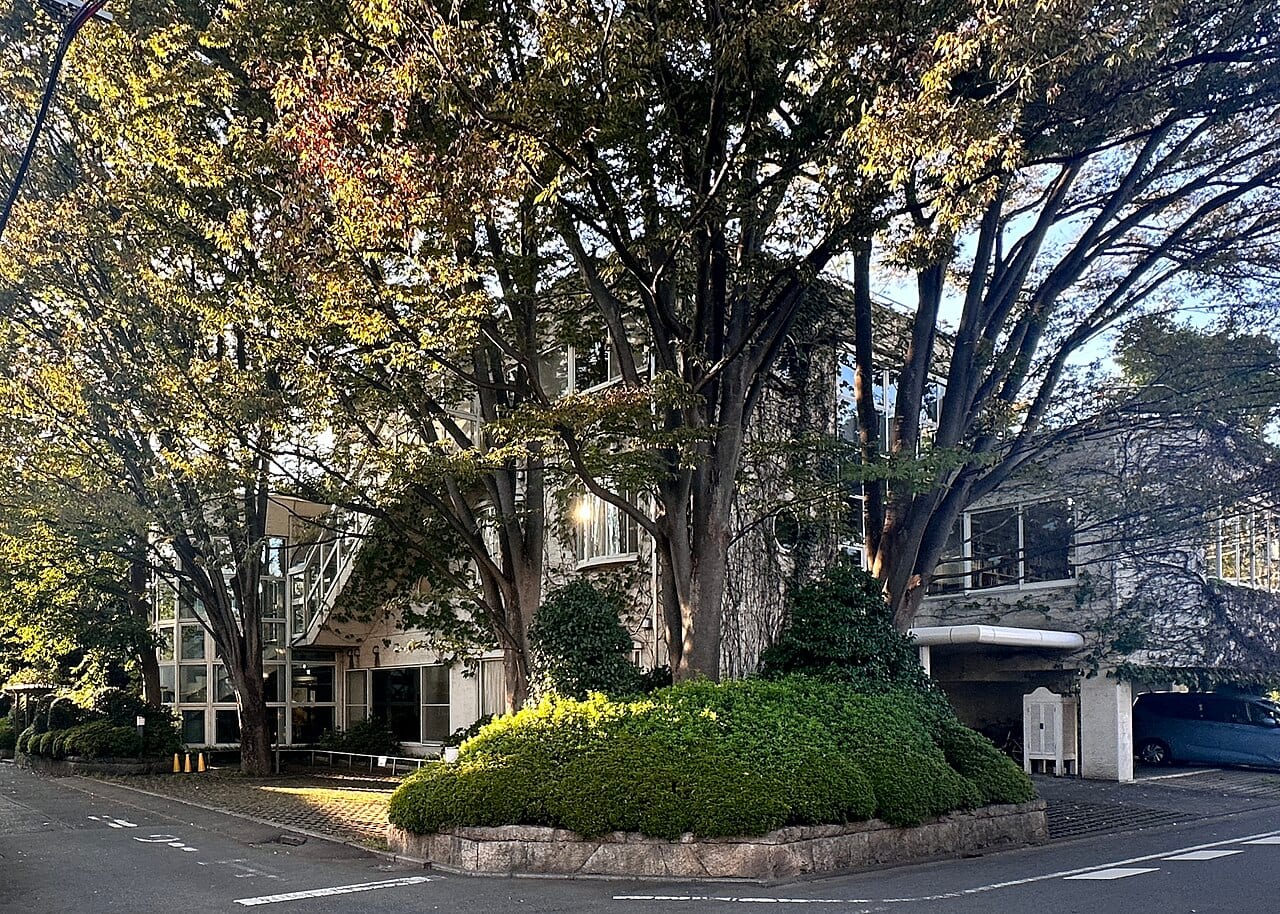

The 2014 pause and the 2017 restart
In September 2013, Hayao Miyazaki announced his retirement from feature films 3. In August of the following year, 2014, Toshio Suzuki announced a pause in the production department in a television documentary 3. When his on-air remark about "dismantling the production department" was reported, Studio Ghibli's public relations office explained that he had not said the studio was withdrawing from animation 21. According to the official "History," the production department was closed at the end of 2014, and the production staff each went on to new paths 3.
In a 2016 interview Suzuki gave Miyazaki's retirement from feature films and Takahata's advanced age as reasons for the pause, and said he himself had wanted time to stop and think 22.
Miyazaki then withdrew his retirement, saying he had "found a subject worth making." In May 2017 the studio recruited newcomers through its official site, and 11 people chosen from applicants around the world began training in October, starting the rebuilding of the production department 3.
Becoming a subsidiary of Nippon Television
On September 21, 2023, Nippon Television Network announced that it would acquire shares of Studio Ghibli and make it a subsidiary. Its share of voting rights is 42.3% 19. According to reports, the reason was the long-standing problem of succession; Goro Miyazaki had been a candidate to succeed, but declined, saying it would be hard to carry Studio Ghibli alone 1923. The Associated Press reported that it began when Suzuki asked Nippon Television executives the previous year for help with management 23. The company history in the corporate profile records that in October 2023 the studio became a subsidiary of Nippon Television through a share transfer 8.
In the company profile updated in June 2026, Toshio Suzuki is Representative Director and Chairman, Hayao Miyazaki is Director and Honorary Chairman, Goro Miyazaki is Managing Director, and the number of employees is 190 8.
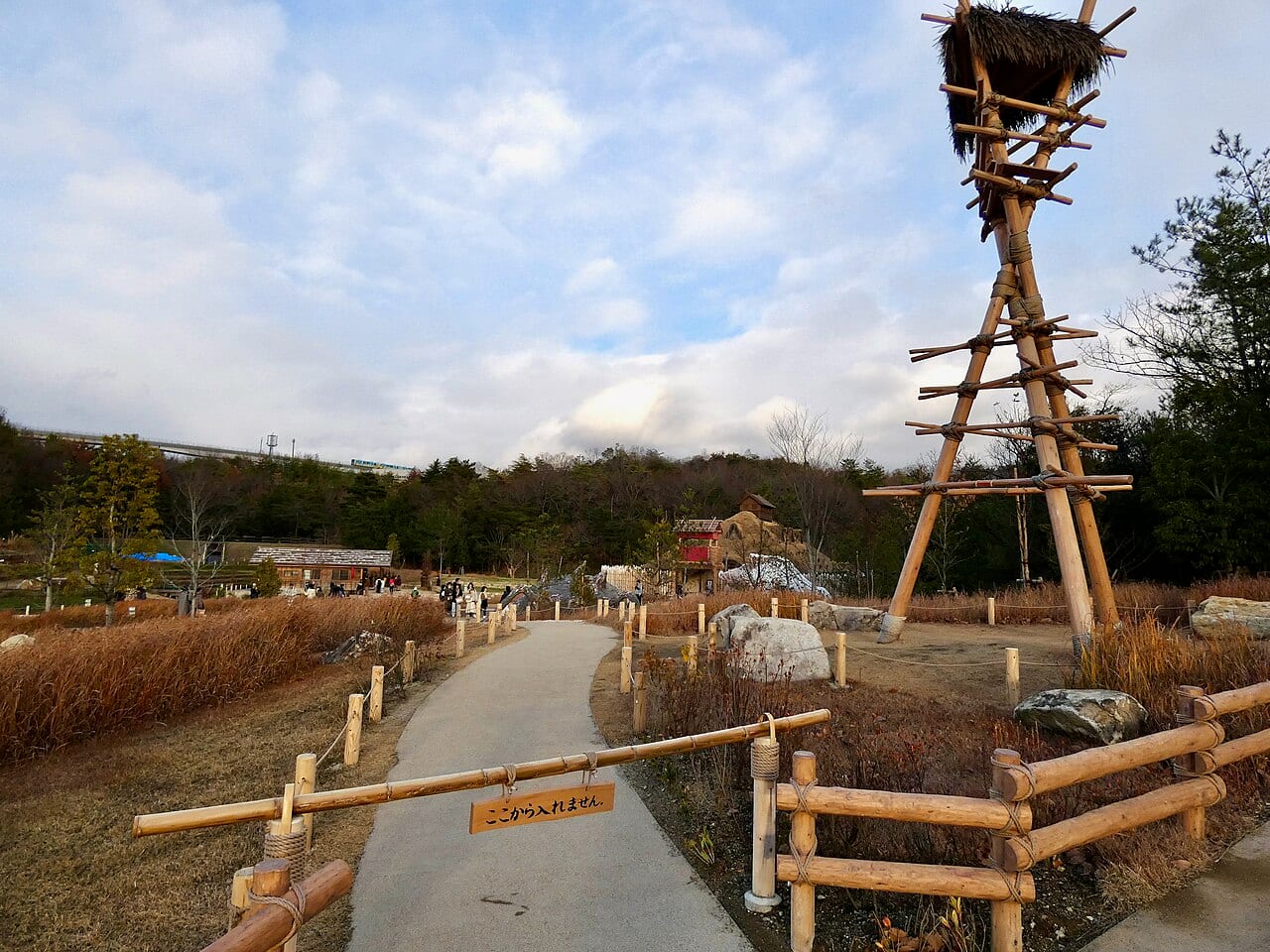

Chapter 6Going Global: How a Studio That Did Not Sell Itself Reached the World
Key points of this chapter
- For a long time Studio Ghibli took no interest in overseas box office and did not actively market itself abroad 3
- In 1996 parent company Tokuma Shoten partnered with Disney, opening the way to worldwide distribution 23
- In 2019 HBO Max in the United States and in 2020 Netflix outside the US, Canada and Japan decided to stream the films, making them available through streaming too 249
Studio Ghibli is known around the world today, but its overseas expansion was not something it set out to engineer. According to the official "History," overseas screenings of its films were for a long time centered on Asia, such as Hong Kong and Taiwan, mainly because the studio had no interest in overseas box office and did not actively sell its films 3.
Prehistory: the shortened Nausicaä of the Valley of the Wind
Before Studio Ghibli was founded, Nausicaä of the Valley of the Wind was released in the United States in 1985 under the title Warriors of the Wind. According to a description by a film society at the University of Wisconsin, this US version had more than 20 minutes cut from the Japanese version, and even the protagonist's name was changed 25. It is commonly said that this experience led to the later stance of "not letting overseas versions cut the films," but this research has not found any primary source recording statements by those involved at the time in 1985.
The turning point: the partnership with Disney
From the mid-1990s, things began to change. My Neighbor Totoro was released theatrically in the United States, and the video later issued by Fox Video sold 600,000 copies. The official site writes that this was a milestone for Japanese film in the United States 3.
In July 1996, parent company Tokuma Shoten formed a business partnership with Disney for its film and video business 2. It was a partnership to distribute the new film Princess Mononoke and the earlier films worldwide. The official site writes that the studio decided on the partnership because it believed Disney would treat its films with care 3. In October of the same year, Tokuma Shoten set up Tokuma International as its overseas division, which later became Studio Ghibli's international business department 2.
After the partnership, the video of Kiki's Delivery Service was released in North America in September 1998, and in October 1999 the English-dubbed Princess Mononoke opened theatrically across the United States. The official site writes that although the box office results were weak, the names of Hayao Miyazaki and Studio Ghibli came to be clearly recognized in the United States. In France the film opened from January 2000 and did well 3.
The official site also states clearly, however, that the partnership does not mean it intends to make films with the world market in mind first. The policy is to make films for Japan first and think about overseas afterward 3.
How far to trust the "no cuts" anecdote
There is a famous anecdote about Studio Ghibli's overseas expansion. When cuts were demanded for the US release of Princess Mononoke, the story goes, the studio side sent a Japanese sword to the other party and demanded "no cuts."
Checking where this story comes from shows that it needs careful handling. In a 2005 interview with the British newspaper The Guardian, when the interviewer asked about this "rumor," Miyazaki answered that it was the producer who actually did it 26. A US animation trade outlet, following the same interview, reported that Miyazaki had said he did not give in to demands for cuts 27. The details of who handed over the sword and how come mainly from a memoir by a person involved 28, and no independent corroboration has been found. In this article we treat as fact only the point that Miyazaki himself said "the producer did it."
Distribution and streaming in North America
Ponyo of 2008 was released in the United States in summer 2010 as "PONYO" on 927 screens nationwide, earning 3.58 million dollars in its first week and placing ninth 3. In 2012 The Secret World of Arrietty opened on 1,522 screens, the largest scale ever for a Studio Ghibli film 3.
North American distribution then moved to the independent distributor GKIDS. In July 2017, GKIDS announced that it had acquired the North American home entertainment rights to Studio Ghibli's films 29.
Streaming also expanded. In October 2019 it was reported that the US streaming service HBO Max had acquired the rights to stream Studio Ghibli's films within the United States 24, and in January 2020 Netflix announced that it would stream 21 titles worldwide except in the United States, Canada and Japan 9.
Worldwide box office
Studio Ghibli's films have also posted large numbers in worldwide box office. According to the box office database Box Office Mojo, Spirited Away's worldwide gross is about 360.8 million dollars including re-releases and about 274.9 million dollars from its original release alone 30. The Boy and the Heron of 2023 grossed about 295.7 million dollars including re-releases, and earned about 47.3 million dollars in North America alone 31.
Chapter 7International Recognition: From the Golden Bear to the Honorary Palme d'Or
Key points of this chapter
- Spirited Away won both the Golden Bear at the Berlin International Film Festival and the Academy Award for Best Animated Feature 26
- At the Academy Awards, The Wind Rises, The Tale of The Princess Kaguya and When Marnie Was There were nominated three years in a row 3
- In 2024 the Cannes Film Festival gave its Honorary Palme d'Or not to an individual but to Studio Ghibli itself 25
Studio Ghibli's international recognition began with the prize for a single film, passed through honors to its directors as individuals, and finally arrived at honors for the studio itself.
Spirited Away: Berlin and Hollywood
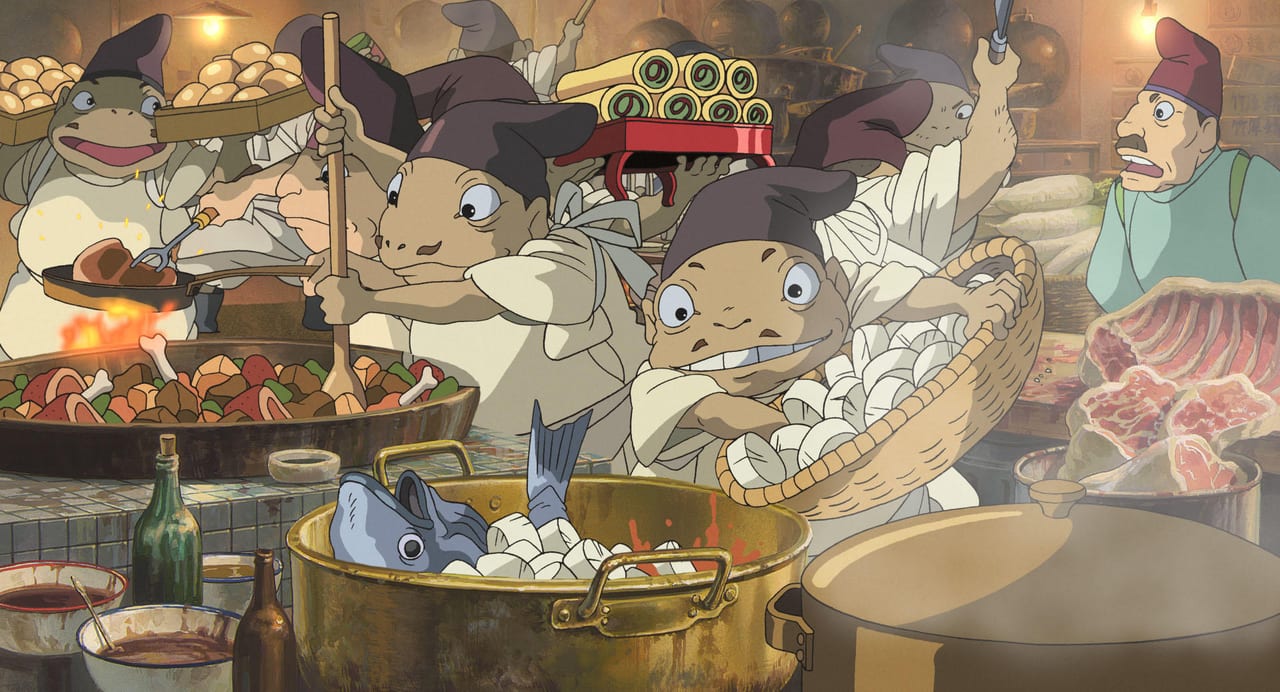
In February 2002, Spirited Away won the Golden Bear at the 52nd Berlin International Film Festival 2. The official "History" writes that it was the first Golden Bear for a Japanese film in 39 years and the first ever for an animated film 3.
In March of the following year, 2003, it won the Academy Award for Best Animated Feature at the 75th Academy Awards 2. According to the Academy's records, the nominees that year included Ice Age, Lilo & Stitch, Spirit: Stallion of the Cimarron and Treasure Planet 6. It was a win for Japanese animation among films from major American studios.
Honors for the directors
Hayao Miyazaki received the Golden Lion for Lifetime Achievement at the 62nd Venice International Film Festival in September 2005 2. The previous year, 2004, Howl's Moving Castle had been entered in the competition at the same festival and won the Osella Award 2. In November 2014 the US Academy of Motion Picture Arts and Sciences gave Miyazaki an Honorary Award 232. In 2012 he was also named a Person of Cultural Merit 2.
Isao Takahata too received the Medal with Purple Ribbon in 1998, the Honorary Award for Lifetime Achievement at the Annecy International Animation Film Festival in 2014, and the Officer of the Order of Arts and Letters of France in 2015 2.
Three nominations in a row
After Miyazaki's retirement, Studio Ghibli's films continued to be recognized. The Wind Rises, The Tale of The Princess Kaguya and When Marnie Was There were nominated for the Academy Award for Best Animated Feature three years in a row 3. The Academy's records also confirm that The Tale of The Princess Kaguya was a nominee at the 87th Awards 33.
The Red Turtle, made with the Dutch director Michael Dudok de Wit, was the first feature Studio Ghibli made in collaboration with a foreign director. It won a Special Prize in the Un Certain Regard section at the 2016 Cannes Film Festival 3 and was also nominated for Best Animated Feature at the 89th Academy Awards 34.
The Boy and the Heron and a second Oscar
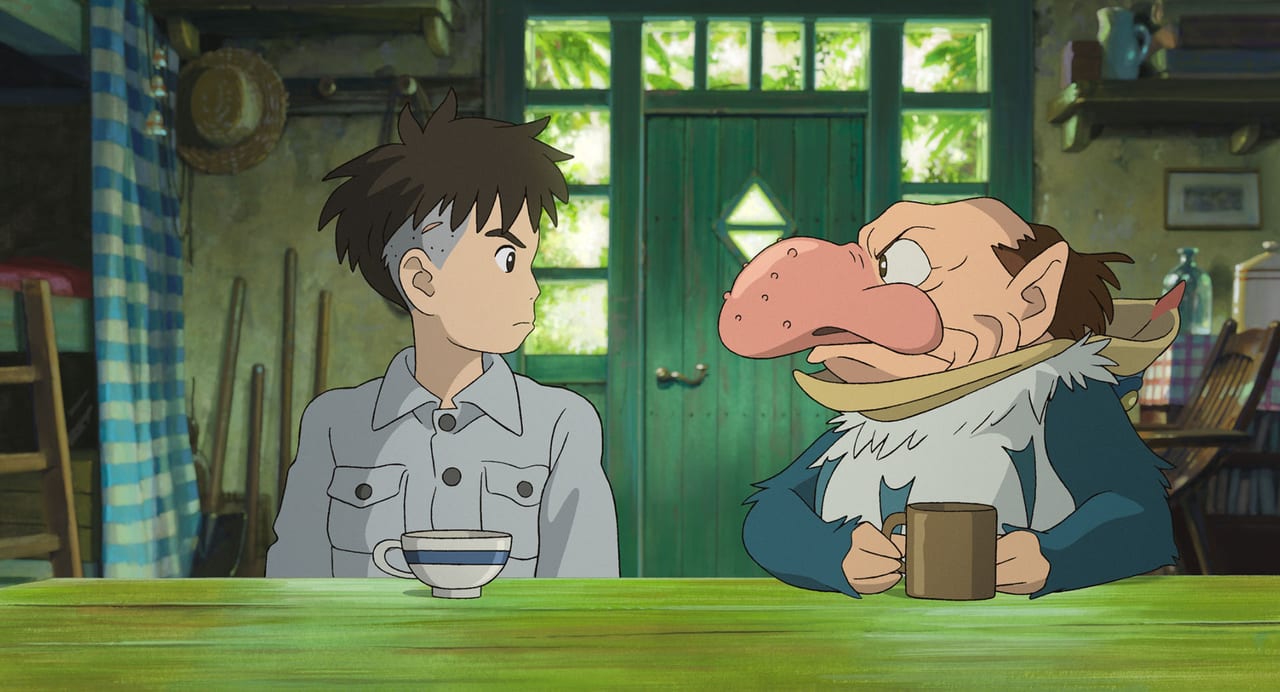
In March 2024, The Boy and the Heron won the Academy Award for Best Animated Feature at the 96th Academy Awards 27. According to the Academy's records, the winners were Hayao Miyazaki and Toshio Suzuki, and the nominees included Elemental, Nimona, Robot Dreams and Spider-Man: Across the Spider-Verse 7. It was the studio's second win, 21 years after Spirited Away.
The Honorary Palme d'Or for the studio itself
In May 2024, Studio Ghibli received the Honorary Palme d'Or at the 77th Cannes Film Festival 2. The Associated Press reported that this was the first time the Honorary Palme d'Or, which Cannes has continued to award, went to anyone other than an individual filmmaker. It was accepted by Goro Miyazaki and by Kenichi Yoda, who as of June 2026 is Representative Director and President, while Hayao Miyazaki sent a message by video 58.
In November of the same year, Hayao Miyazaki also received the Ramon Magsaysay Award of the Philippines 2.
Chapter 8Shared Ideas and Expression: Stories That Do Not Give Simple Answers
Key points of this chapter
- Studio Ghibli writes officially that it has given first priority to "contemporaneity" when choosing themes 3
- Hayao Miyazaki has given different explanations at different times for why girls are the protagonists, so no single answer sums it up 3536
- At his retirement press conference Miyazaki said that the foundation of his work is telling children that "this world is worth living in" 37
Studio Ghibli's films have recurring elements: nature, girl protagonists, flight, war, work. But if we try to sum them up in one line as "the Ghibli message," we drift away from what the filmmakers themselves have said. This chapter looks for what the films share by following the creators' own explanations.
Note that some of Hayao Miyazaki's remarks can be confirmed only through English translations by overseas fan sites, not Japanese originals. In those cases the text states "according to the English translation."
Studio Ghibli has depicted "the present"
The official "History" writes that, as to the content of its films, the studio always sets themes with contemporaneity as its first consideration 3. The examples it gives are Pom Poko, which depicts tanuki while overlapping them with the Japanese and makes a film that looks back on the 50 years since the war, and the ironworks town in Princess Mononoke, whose setting cannot be simply divided into good and evil. The official site calls the latter "the present itself" 3.
Nature: not only something to be protected
Princess Mononoke is often introduced as an environmental film. But according to an English translation of a production record, Miyazaki said he had no intention of conveying a simple message such as "let's protect nature" 38. Neither the people of the ironworks who clear the forest nor the gods of the forest are portrayed as being simply in the right.
On Nausicaä of the Valley of the Wind as well, according to an English translation of a 1984 magazine interview, Miyazaki describes Nausicaä not as a protagonist who defeats enemies but as one who understands and accepts 35.
Girl protagonists: more than one reason
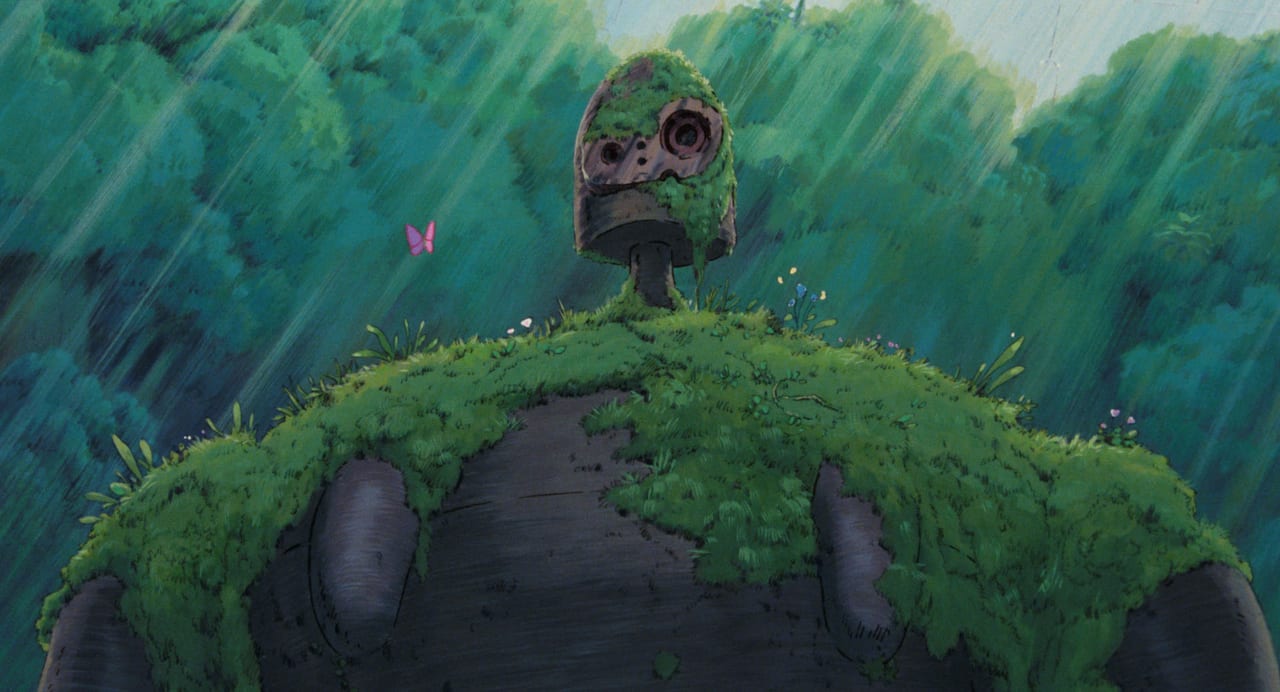
Many Studio Ghibli films have girls as protagonists. Miyazaki has spoken about the reason at several points in time, but the explanations are not the same.
According to the English translation, in 1984 he said, in effect, that he felt a woman was better suited as a protagonist to face the problems of nature. In 1994, after saying he did not decide by reasoning, he said in effect that it is closer to reality now to say "because I like women" 35. For Spirited Away in 2001, he said he wanted to make a film that the young friends close to him could enjoy, and that until then he had not made a film for ten-year-old girls 36.
Flight: freedom and anxiety
The studio's very name comes from the name of an Italian reconnaissance aircraft 11. In Miyazaki's films, scenes of flying appear again and again.
But flying is not portrayed as simple liberation. According to an English translation of the planning statement for Kiki's Delivery Service, Miyazaki wrote, in effect, that the power of flight is thought to release people from the ground, but that such freedom comes with anxiety and loneliness 39.
War: not summed up as "anti-war"
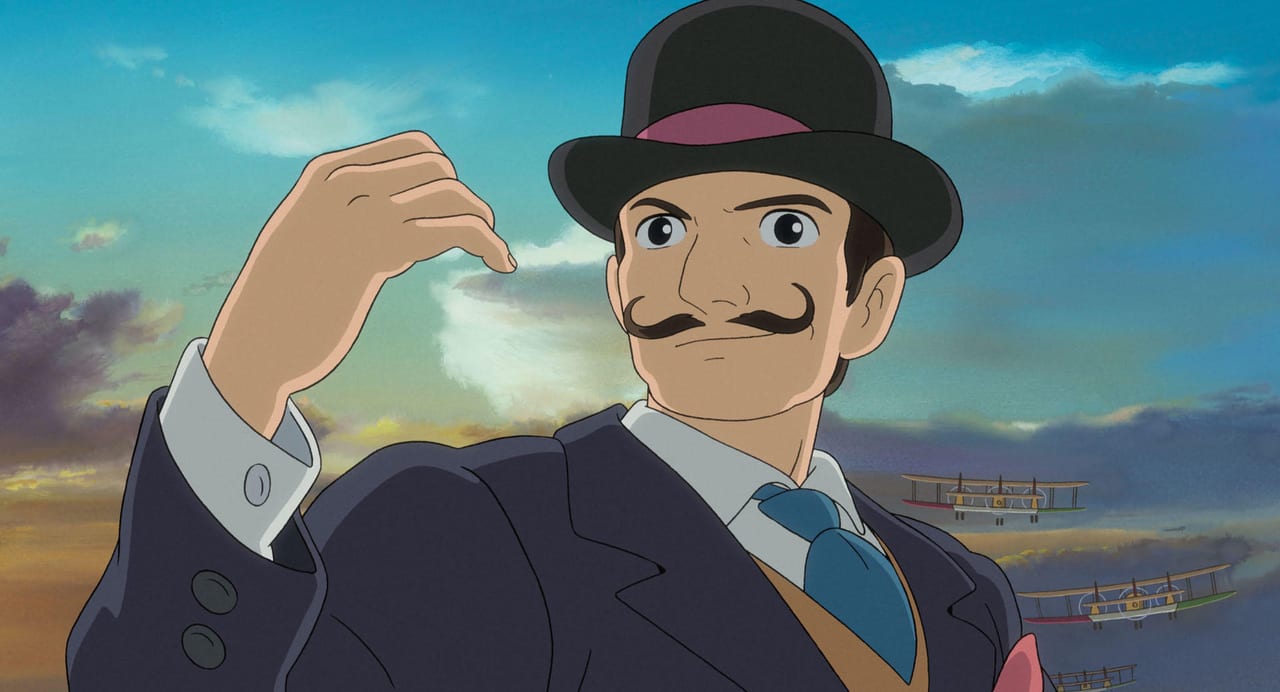
Hayao Miyazaki is sometimes called an "anti-war creator," but his own words are more complicated. According to a 1988 English translation, Miyazaki said of Isao Takahata's Grave of the Fireflies that it is not an anti-war film 40.
The Wind Rises in 2013 takes as its protagonist an engineer devoted to aircraft design in prewar Japan. At his retirement press conference Miyazaki said the film's setting was an era in which Japanese militarism was heading toward ruin, and that many doubts were raised, by his family, by himself and by his staff 37. It was a film made by a creator who was himself carrying uncertainty.
Work: what is independence?
Scenes of work, too, recur in Studio Ghibli's films. According to an English translation of the planning statement for Kiki's Delivery Service, Miyazaki wrote of his awareness of a problem: that economic independence used to be, by itself, spiritual independence, but is no longer so 39. The story of Kiki finding work in a strange town and making a place of her own can be read as one way of answering this question.
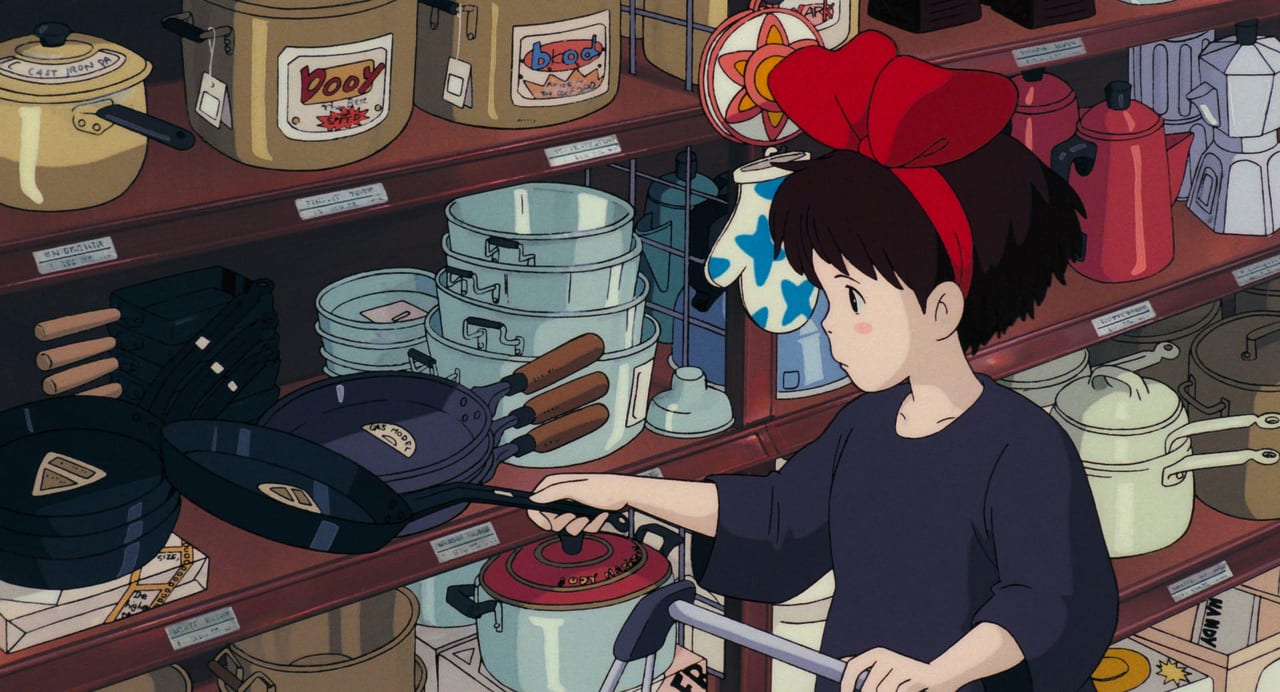
"Ma": time in which nothing happens
When discussing Miyazaki's expression, "ma" is often cited. In 2002 the American film critic Roger Ebert told him he liked moments that do not advance the story, such as a character simply sitting or sighing, and Miyazaki is said to have replied that the Japanese language has a word for this, "ma," and that he places such moments intentionally 41.
"This world is worth living in"
At his 2013 retirement press conference, Hayao Miyazaki said that telling children that "this world is worth living in" must be at the foundation of their work 37.
Chapter 9Limits and Debates: Succession, Cost, and Misunderstandings
Key points of this chapter
- The official history itself writes that a setup in which employees cover every process is both a strength that supports quality and a weakness that raises costs 3
- On the training of successors, Toshio Suzuki said in 2023 that they had tried various things and failed at every one 42
- Some words that spread as Hayao Miyazaki's statements are out of context or are not his statements at all 4344
To measure Studio Ghibli's achievements properly, we also need to look at the strains its system has carried. Many of the issues in this chapter are not outside criticism but ones Studio Ghibli itself admits in its official texts.
Strength and weakness lie in the same place
As we saw in Chapters 4 and 5, Studio Ghibli has covered almost all the work needed for film production with its own employees. The official "History" says this contributes greatly to continuing to make good films, and, seen from another angle, is also one of its weaknesses. It also notes that the studio has repeatedly heard that Studio Ghibli films cost more than those of other studios 3.
With employees on the payroll, salaries cannot be paid unless films keep being made. The official site calls this the "fate of having to keep making films" that Studio Ghibli took on itself 3. This structure worked as long as the two directors kept making films, but it loses its support when the directors stop. That Toshio Suzuki cited Miyazaki's retirement and Takahata's advanced age as the reasons for the 2014 pause in the production department 22 is the flip side of this structure.
The problem of television
Studio Ghibli also writes officially about experiences where things did not go well outside theatrical features. In 1993, with a director other than Takahata and Miyazaki and young staff, it made its first television work, Ocean Waves. It earned a certain reputation, but went far beyond its budget and schedule, and the official site writes that "television is a major issue for Ghibli going forward" 3. It could be said that Studio Ghibli was unable to take the industry's usual form of earning from television while making films.
The succession problem
Studio Ghibli has tried to nurture the generation after the two directors. In 1995 Takahata, and in 1998 Miyazaki, opened direction courses with themselves as head 2, and in 2009 the studio set up "West Ghibli," a limited-term base for training newcomers, in Toyota, Aichi Prefecture 2. In 2006 Goro Miyazaki made his directing debut with Tales from Earthsea, and under a plan drawn up by Hayao Miyazaki to give young directors a chance, Hiromasa Yonebayashi directed The Secret World of Arrietty in 2010, Goro Miyazaki directed From Up on Poppy Hill in 2011, and Yonebayashi directed When Marnie Was There in 2014 3.
Even so, when the studio became a subsidiary of Nippon Television in 2023, Toshio Suzuki said that on training the next generation they had tried various things and all of them had ended in failure 42. According to reports, Goro Miyazaki, a candidate to succeed, also declined, saying it would be hard to carry Studio Ghibli alone 19. A US film outlet pointed out that some of the people who grew up at Studio Ghibli have left to found new studios, and argued that the studio's future is uncertain 45.
New technical challenges, too, were not quickly rewarded with recognition. Earwig and the Witch of 2020, Studio Ghibli's first fully 3DCG feature 2, received harsh reviews from American critics, a US animation trade outlet reported 46.
Working conditions in the animation industry
Studio Ghibli's move to salaried staff was an answer to a situation where piece-rate pay left incomes at about half those of ordinary salaried workers 3. Yet the problems in working conditions across the Japanese animation industry continue today. In an industry association survey reported in 2024, the 323 animation workers who responded worked an average of 219 hours a month, and 37.7% earned less than 200,000 yen a month 47. These are not figures for Studio Ghibli specifically. They should be read as background for gauging how exceptional a choice Studio Ghibli's move to salaried staff was within the industry.
Misunderstandings that spread
Some words attached to Studio Ghibli and Hayao Miyazaki have spread in forms that differ from the facts.
In the English-speaking world, the line "Miyazaki said anime was a mistake" circulates widely, but it is not his statement. It originated in 2015 as a meme made online by attaching fake subtitles to footage from a documentary film 43.
Also often quoted is the scene from a 2016 NHK program in which Miyazaki criticized an AI-generated video as "an insult to life itself." What he was shown then was CG footage of a human body whose movement had been generated by machine learning, and his words were a reaction to that footage 44. Using it as his view on image-generating AI in general in the 2020s takes it out of context.
The "sword" anecdote about the US release of Princess Mononoke, as we saw in Chapter 6, also has limited sources for its details 2628.
Sources
The small numbers in the text refer to this list. The access date is the day we last opened the source and checked its content.
- ジブリ美術館へようこそ(屋上のロボット兵は守り神)三鷹の森ジブリ美術館OfficialAccessed 2026-10-25
- スタジオジブリの年表スタジオジブリ公式サイトPrimaryAccessed 2026-10-24
- スタジオジブリの歴史スタジオジブリ公式サイトPrimaryAccessed 2026-10-24
- 歴代興収ベスト100(2026年10月18日現在)興行通信社OfficialAccessed 2026-10-24
- Studio Ghibli takes a bow at Cannes with an honorary Palme d'OrJake Coyle, AP通信(KSAT 転載), 2024-05-20PressAccessed 2026-10-24
- The 75th Academy Awards (2003)Academy of Motion Picture Arts and SciencesOfficialAccessed 2026-10-24
- The 96th Academy Awards (2024)Academy of Motion Picture Arts and SciencesOfficialAccessed 2026-10-24
- スタジオジブリの概要(会社情報、2026年6月更新)スタジオジブリ公式サイトPrimaryAccessed 2026-10-24
- Netflix Releases 21 Studio Ghibli Masterpieces Around the WorldNetflix, 2020-01-20PrimaryAccessed 2026-10-24
- ジブリパークAichi Now(愛知県観光公式サイト)OfficialAccessed 2026-10-24
- Q&A(ジブリという名前の由来は?)スタジオジブリ公式サイトPrimaryAccessed 2026-10-24
- 鈴木敏夫プロデューサーに聞く“現在進行形”の宮崎駿監督とスタジオジブリ板倉君枝, nippon.com, 2016-07-06PressAccessed 2026-10-24
- 1989年 配給収入上位作品日本映画製作者連盟OfficialAccessed 2026-10-24
- 1997年 配給収入上位作品日本映画製作者連盟OfficialAccessed 2026-10-24
- Box Office: Hayao Miyazaki's The Boy and the Heron(日本公開初週末の報道)Patrick Brzeski, The Hollywood Reporter(Yahoo News 転載), 2023-07-18PressAccessed 2026-10-24
- スタジオジブリ、「ゲド戦記」のフルデジタル制作環境を説明AV Watch(Impress), 2006-06-26PressAccessed 2026-10-24
- 男鹿和雄「秋田、遊びの風景」展三鷹の森ジブリ美術館OfficialAccessed 2026-10-24
- 1997年3月 映画『もののけ姫』制作日誌スタジオジブリ公式サイト, 1997-03PrimaryAccessed 2026-10-24
- 日本テレビ、スタジオジブリを子会社化AV Watch(Impress), 2023-09-21PressAccessed 2026-10-24
- 美術館について三鷹の森ジブリ美術館OfficialAccessed 2026-10-24
- ジブリ鈴木敏夫氏 製作部門解体発言は「彼一流の“戦略”」か日刊ゲンダイ, 2014-08-05PressAccessed 2026-10-24
- What's Up at Studio Ghibli? Catching Up with Producer Suzuki ToshioItakura Kimie, nippon.com, 2016-07-06PressAccessed 2026-10-24
- Japan TV network will acquire Totoro creator Studio Ghibli as animation studio prepares for futureYuri Kageyama, AP通信(News4JAX 転載), 2023-09-21PressAccessed 2026-10-24
- Studio Ghibli movies are coming to HBO MaxSam Barsanti, The A.V. Club, 2019-10-17PressAccessed 2026-10-24
- When NAUSICAÄ Became WARRIORS OF THE WINDJames LaPierre, UW–Madison Cinematheque, 2016-09-06SecondaryAccessed 2026-10-24
- Interview with Hayao Miyazaki(The Guardian 2005年のインタビューの転載)danq.me, 2005-09-18SecondaryAccessed 2026-10-24
- Miyazaki Knows how to deal with HollywoodAmid Amidi, Cartoon Brew, 2005-09-14PressAccessed 2026-10-24
- The Time Studio Ghibli Stood Up To Harvey WeinsteinBrian Ashcraft, Kotaku, 2018-02-22PressAccessed 2026-10-24
- GKIDS Nabs Home Entertainment Rights to Studio Ghibli CatalogAnimation World Network, 2017-07-17PressAccessed 2026-10-24
- Spirited AwayBox Office MojoSecondaryAccessed 2026-10-24
- The Boy and the HeronBox Office MojoSecondaryAccessed 2026-10-24
- The 2014 Governors AwardsAcademy of Motion Picture Arts and SciencesOfficialAccessed 2026-10-24
- The 87th Academy Awards (2015)Academy of Motion Picture Arts and SciencesOfficialAccessed 2026-10-24
- The 89th Academy Awards (2017)Academy of Motion Picture Arts and SciencesOfficialAccessed 2026-10-24
- Miyazaki on heroines(1984年『ヤングマガジン』、1994年『季刊イイチコ』ほかの英訳)Nausicaa.netSecondaryAccessed 2026-10-24
- Miyazaki on Spirited Away(『アニメージュ』2001年5月号の英訳)Nausicaa.netSecondaryAccessed 2026-10-24
- 宮崎駿監督引退会見 全文ITmedia NEWS, 2013-09-06PressAccessed 2026-10-24
- The Making of Princess Mononoke, Part 1(書き起こしの英訳)Nausicaa.netSecondaryAccessed 2026-10-24
- The Hopes and Spirit of Contemporary Japanese Girls(『魔女の宅急便』企画の言葉の英訳)Nausicaa.netSecondaryAccessed 2026-10-24
- Miyazaki on Grave of the Fireflies(『朝日ジャーナル』1988年の英訳)Nausicaa.netSecondaryAccessed 2026-10-24
- Emptiness(Roger Ebert による宮崎駿インタビュー 2002年の引用)vanderburg.org, 2002-09-23SecondaryAccessed 2026-10-24
- 鈴木敏夫氏 日テレ子会社化会見週刊女性PRIME, 2023-09-27PressAccessed 2026-10-24
- Anime Was a MistakeKnow Your MemeSecondaryAccessed 2026-10-24
- Hayao Miyazaki calls AI generated animation "an insult to life itself"Rich Haridy, New Atlas, 2016-12-11PressAccessed 2026-10-24
- Why The Greatest Animation Studio In The World Faces An Uncertain FutureRafael Motamayor, SlashFilm, 2023-10-10PressAccessed 2026-10-24
- Earwig and the Witch: Studio Ghibli's Magic-Heavy CG Feature Fails to Enchant CriticsAlex Dudok de Wit, Cartoon Brew, 2021-02-05PressAccessed 2026-10-24
- New survey shows Japan's animation workers are overworked, underpaid and face regular harassmentCartoon Brew, 2024-03-29PressAccessed 2026-10-24
About the images
Images in this article are freely licensed photos from Wikimedia Commons, materials officially provided by rights holders, and photos from Pixabay. The source is shown under each image. The background art at the top of the page is a Pixabay illustration (AI-generated), shown in black and white.