
This article is a translation of the Japanese original. Source titles are listed in their original language. 日本語の原文
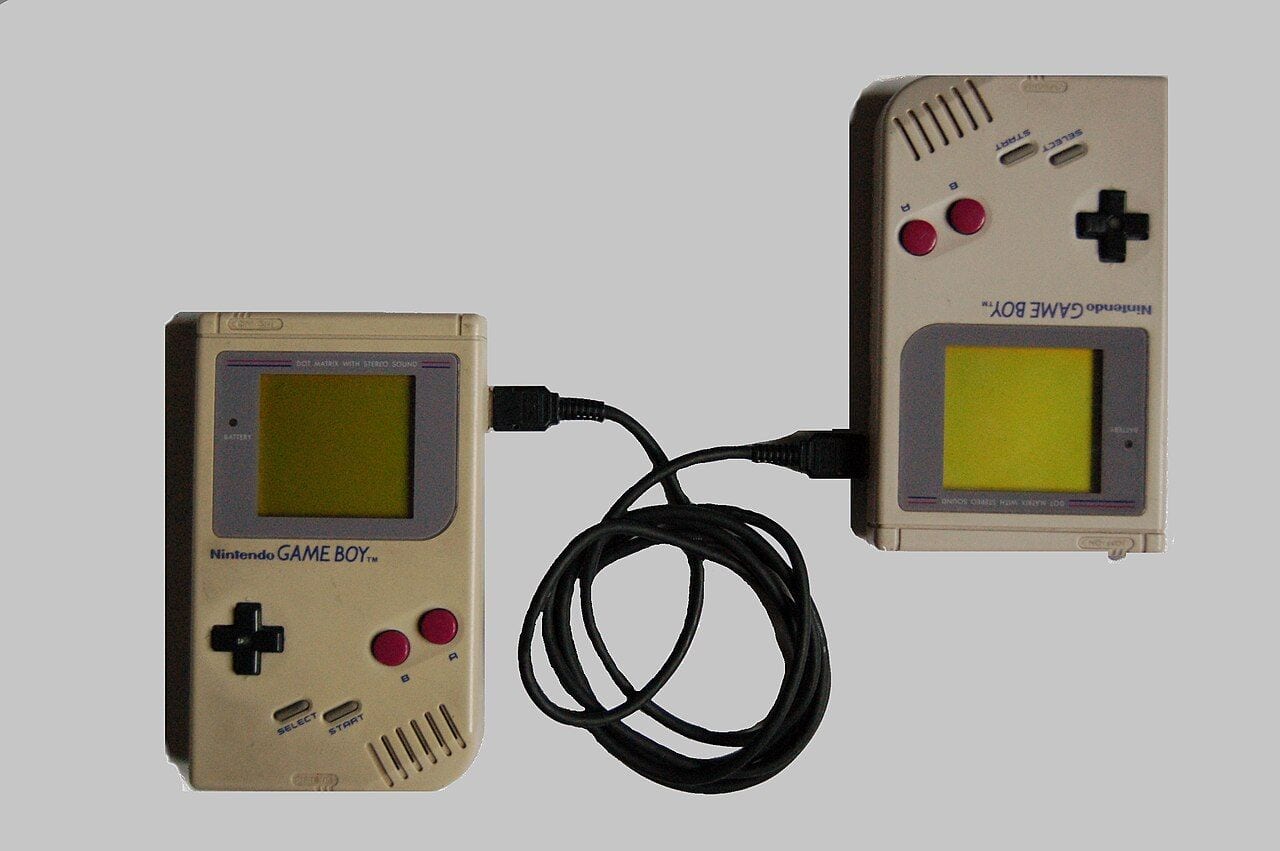

Pokémon was born on February 27, 1996, as the Game Boy software Pocket Monsters Red and Green 2. Sales at first were quiet, with an opening that barely made the top 10 of the weekly rankings 2. Thirty years later, cumulative shipments of Pokémon-related game software exceed 515 million copies, and cumulative production of the trading card game exceeds 85 billion cards (both as of the end of March 2026) 3.
But numbers alone cannot explain how big Pokémon is. Its starting point was a single link cable connecting Game Boys, and the idea of trading creatures with friends 41. And what grew that play was not one company but three, Nintendo, Creatures and Game Freak, together with The Pokémon Company, born from their joint investment 5. The path these "modern samurai" opened lies not in a single genius but in both the design of the play and the way the companies were put together.
Based on The Pokémon Company's official history and figures, Nintendo's securities reports and interviews, a report by the Ministry of Posts and Telecommunications (now the Ministry of Internal Affairs and Communications), and reporting from the time, this article lays out the whole picture of Pokémon in eight chapters. It covers not only the achievements but also the 1997 broadcast incident, criticism of quality, resale and counterfeits, and disputes over intellectual property. Facts and the editors' analysis are visually separated.
At a glance
515 million+
Cumulative shipments of Pokémon-related game software, in copies (as of the end of March 2026) 3
85 billion+
Cumulative production of the Pokémon Trading Card Game, in cards. Sold in 16 languages and more than 90 countries and regions (as of the end of March 2026) 3
190+
Number of countries and regions where the TV anime has aired (actual, as of the end of March 2026) 3
32%
Share of voting rights in The Pokémon Company held by Nintendo (Nintendo securities report, as of the end of March 2026) 6
About $147 billion
Total Pokémon revenue as estimated by the Guinness World Record "Best-selling media franchise" (as of April 2024; not a company announcement) 7
About 78,000
Entries received in April 1996 for a giveaway of the "legendary Pokémon" Mew, with 20 winners 2
Timeline
- 1989Game Boy launches in April. On the 26th of the same month, Satoshi Tajiri founds Game Freak Inc. 28
- 1990Planning begins for what would become Pocket Monsters 2
- 1995Creatures Inc. is founded in November 9
- 1996Pocket Monsters Red and Green is released on February 27. The Pokémon Trading Card Game is released on October 20 210
- 1997The anime begins airing on TV Tokyo stations in April. After the December 16 broadcast, 685 people are taken to hospital by ambulance across Japan 511
- 1998In April Pokémon Center Co., Ltd. is established with joint investment from the three companies. TV Tokyo resumes the broadcast. The first feature film opens in July, and in September the games and anime begin in the United States 511
- 1999The card game launches in the United States in January. Gold and Silver is released in November, and the film opens in the US. Pokémon appears on the cover of TIME 512
- 2000In October the company changes its name to The Pokémon Company and takes charge of brand management overall 5
- 2001Pokémon USA, Inc. (now The Pokémon Company International) is established in February 5
- 2009In April the US and UK operations are combined into The Pokémon Company International. In August the official tournament Pokémon World Championships 2009 is held 135
- 2013Pokémon X and Y, in October, is the first game in the series released worldwide simultaneously 5
- 2016Pokémon GO launches in July 5
- 2019The Hollywood film Detective Pikachu is released in May. Sword and Shield is released in November 5
- 2022Scarlet and Violet is released in November. In December Nintendo apologizes for problems with the game's operation in an announcement about an update 514
- 2024In September Nintendo and The Pokémon Company sue the developer of Palworld for patent infringement 15
- 2026Red and Green reaches its 30th anniversary in February. Cumulative game shipments as of the end of March exceed 515 million 163
Who did what
- Satoshi Tajiri → Game Freak: Founder and head
- Game Freak → The Pokémon Company: Joint investment
- Nintendo → The Pokémon Company: Joint investment; 32% of voting rights
- Creatures → The Pokémon Company: Joint investment
- Tsunekazu Ishihara → The Pokémon Company: Representative Director and President
- Tsunekazu Ishihara → Creatures: Former chairman (stepped down 2023)
- The Pokémon Company → TPCi: Group's overseas company
Chapter 1The Eve of Birth: Satoshi Tajiri, Insect Collecting, and Game Freak
Key points of this chapter
- Satoshi Tajiri, the originator of Pokémon, was so absorbed in collecting insects and other creatures as a child that he wanted to become an entomologist 4
- Tajiri founded Game Freak Inc. in 1989 and planning began in 1990, but it took about six years to reach release 82
- Right after its release in February 1996 the game had a quiet start; what turned things around were word of mouth, CoroCoro Comic, and the "legendary Pokémon" Mew 2
The origin of Pokémon lies in one boy's bug catching. According to a 1999 article in which the Asian edition of TIME interviewed Satoshi Tajiri, he was born to a Nissan salesman and a full-time homemaker and grew up in the suburbs of Tokyo in the late 1960s 4. Tajiri told the interviewer that as a child he wanted to become an entomologist. Put your hand in the river and you could catch crayfish; stick a rod into the water and look for bubbles and you would find another creature; every new insect was a bundle of wonder, he said in effect 4.
Pokémon was born from a lost playground
By the late 1970s, however, the rice fields around Tajiri had turned into shopping centers, and the ponds had been filled in to make apartment buildings, roads and railway lines. Tajiri told TIME that the pond where fish used to live had become an arcade 4. He also said that Pokémon is meant to give a new generation of children the chance to collect insects and creatures as he did 4.
That many Pokémon look like caterpillars, moths and crabs, and lurk everywhere, in grass, caves, forests and rivers, is a reflection of this formative experience 4. Tajiri himself said, in effect, that Pokémon is everything he did as a child brought together into one 4.
From game magazine to game company
Tajiri threw himself into his other passion too, video games. According to TIME, he did not go to university but studied electronics at a two-year vocational school and spent much of his time in arcades 4. With friends he started a fanzine called Game Freak, which carried game strategies and tricks. Among his friends was Ken Sugimori, who would later draw the Pokémon 4.
Sources disagree on the year this fanzine began. TIME gives 1982, while Famitsu.com introduces the fanzine that gave the company its name as one Tajiri made in 1983 417. Famitsu.com also reports that Tajiri contributed to the first issue of Famicom Tsushin (now Weekly Famitsu) as a professional game writer 17.
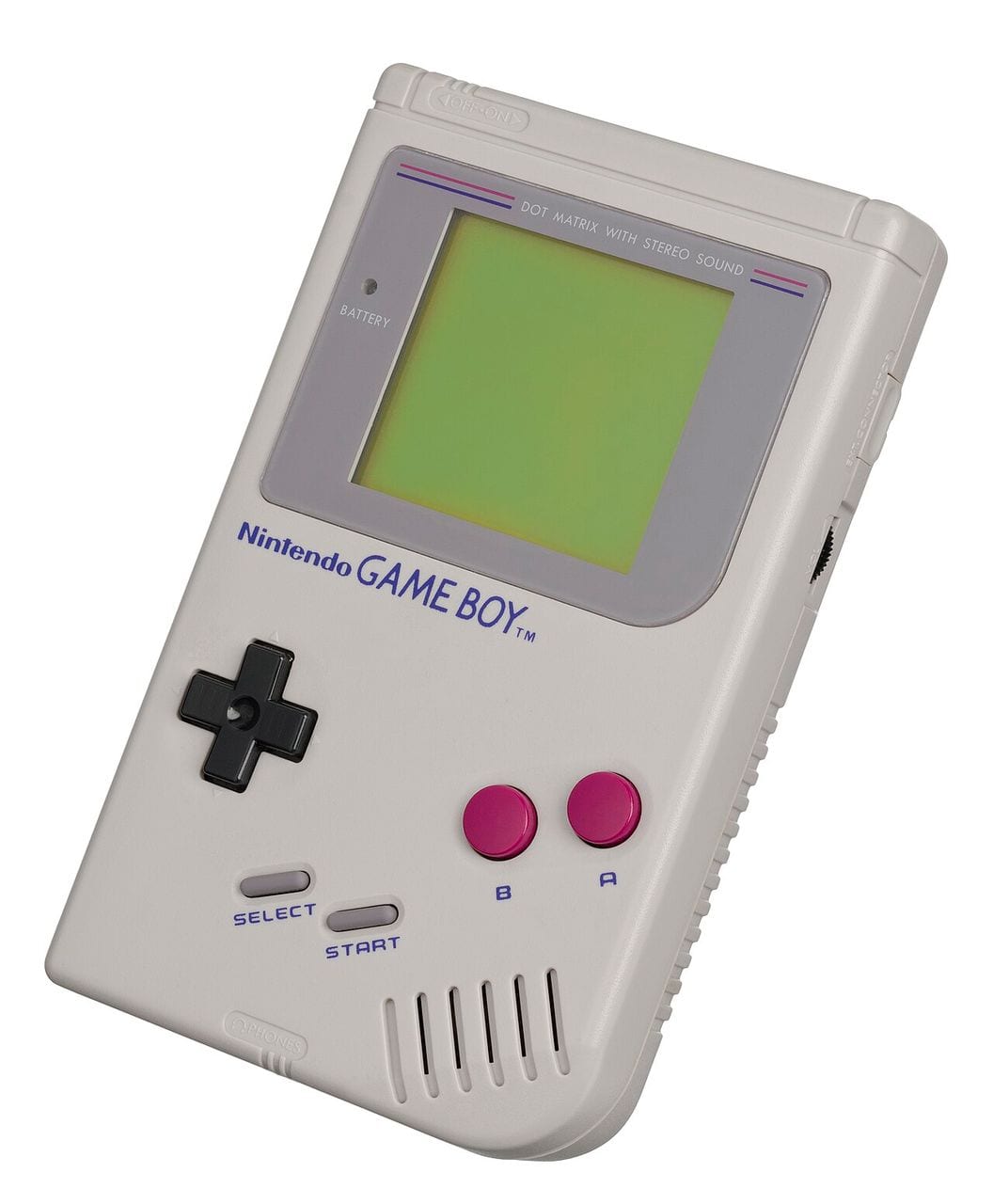
His friends' conclusion was that if there were few well-made games, they should make them themselves. TIME writes that Tajiri took apart a Nintendo console to study how it was made 4. Game Freak Inc. was founded on April 26, 1989, with Satoshi Tajiri as Representative Director 8. In the same month, April 1989, Nintendo had released the Game Boy, a handheld console with a monochrome LCD screen 2.

Six years of development
Tsunekazu Ishihara, who became president at the same time as the predecessor of The Pokémon Company was established in 1998 1, recalled in a conversation with then Nintendo president Satoru Iwata that planning for Pokémon began in 1990 2. As producer, Ishihara worked with Game Freak on the development of the first game. The project had originally been drawn up as software for a new console, the Game Boy 2. In Famitsu.com's chronology, the 1990 entry carries a working title, "Capsule Monsters" 17.
Tajiri explained to TIME that the monsters had to be small and controllable. His image was of monsters in capsules, the monsters inside oneself such as anger and fear 4.
Development of Pokémon was rough going. According to TIME, Tajiri signed with Nintendo but could not explain his vision well, and Nintendo, for its part, could not fully grasp it. Shigeru Miyamoto, who created Super Mario Bros., said that at first it was just an idea and nothing moved forward, and he became Tajiri's adviser 4. During the six years until completion, Game Freak came close to bankruptcy, and for several months it could barely pay its employees. When Tajiri told them how bad things were, five quit, and TIME writes that Tajiri paid himself nothing and lived by relying on his father 4.
Note that TIME puts the time Tajiri learned of the Game Boy and its link cable at 1991, which does not match Nintendo's primary sources, which place the Game Boy's release in 1989 and the start of planning in 1990 42. For years, this article follows Nintendo's materials.
Pokémon, in time for "the last train"
Pocket Monsters Red and Green was released on February 27, 1996 2. According to Ishihara, they had wanted to finish it the previous October and sell it in the year-end season, but missed that, and it came out at the end of February, the worst time of year for a product 2. By then there was a feeling that the Game Boy was already finished, and Ishihara says he felt as if he had "missed the last train" 2.
In Iwata's and Ishihara's recollection, the initial shipment was smaller than expected, and in the weekly sales rankings the game was on the edge of the top 10 2. What turned things around, Ishihara cites first as the power of word of mouth and second as the power of magazines, centered on CoroCoro Comic 2.
Mew, a "prank"
Another deciding factor was Mew. According to Morimoto of Game Freak, who joined development as a programmer, Mew was put in at the very last moment of development. The cartridge capacity was at its limit, but by removing a testing program that the product did not need, a gap of about 300 bytes opened up, and Mew was fitted into it 2. Morimoto said it was a prank that included Tajiri. By design Mew should not have appeared unless a mechanism was set up for it, but because of an unexpected bug it showed up for some players 2.
From here the "legendary Pokémon giveaway" began. The campaign, announced in the April 1996 issue of CoroCoro Comic, drew about 78,000 entries for 20 winners 2. According to Ishihara, sales that had been at a given level "per month" became the same level "per week," then swelled to three and four times that. The game reached No. 1 in the weekly rankings only a year and a half or more after its release 2.
Chapter 2Nintendo, Game Freak, Creatures and The Pokémon Company: How They Relate
Key points of this chapter
- The original copyright holders of Pokémon are the three companies Nintendo, Creatures and Game Freak, and the trademarks are also shown under their joint names 5
- The predecessor of The Pokémon Company was born in 1998 with joint investment from the three companies, and in October 2000 it took its present name and took charge of brand management overall 518
- Nintendo holds 32% of the voting rights of The Pokémon Company. The theory that the three companies invest equally cannot be confirmed from primary sources 6
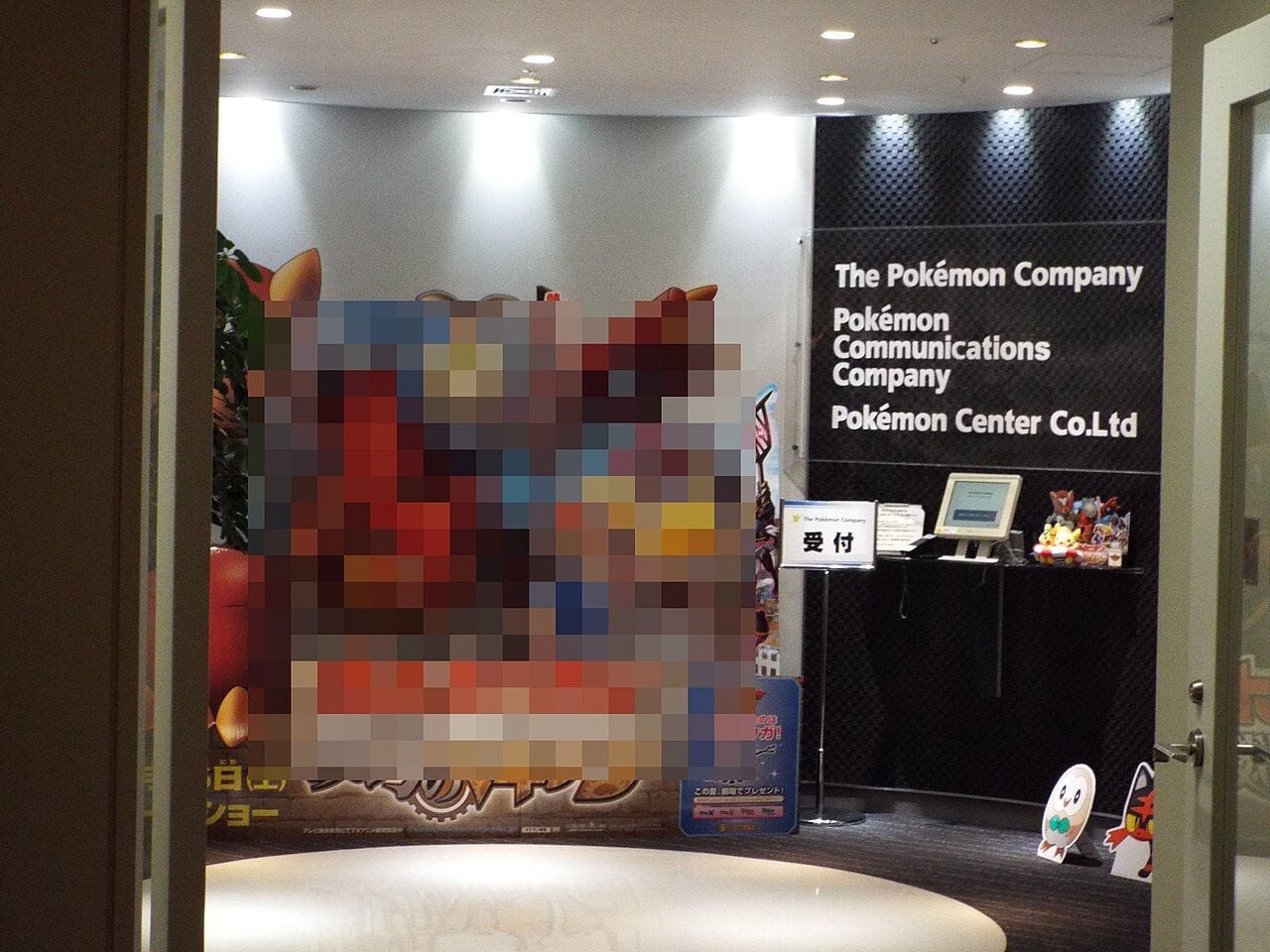
Pokémon tends to be thought of as "a Nintendo game," but it has not been shaped by a single company. The official history of The Pokémon Company names Nintendo, Creatures and Game Freak as the original copyright holders of Pokémon 5. At the very bottom of the official site too, "Pocket Monsters, Pokémon, Pokémon" are stated to be trademarks of the three companies, under their joint names 5.
How the three companies involved in Pokémon divide the work
The Pokémon Company's "History" describes the roles of the three companies as follows. Nintendo manufactures and sells the Pokémon video games. Game Freak provides the original concept of the Pocket Monsters series and develops the video games. Creatures develops the trading card game and video games, along with the CG models and motion for the Pocket Monsters series and others 5.
| Company | Founded | Role as described by The Pokémon Company |
|---|---|---|
| Nintendo | — | Manufacturing and sales of Pokémon video games 5 |
| Game Freak | April 26, 1989 8 | Original concept for the Pocket Monsters series; development of video games 5 |
| Creatures | November 8, 1995 9 | Development of the trading card game and video games; development of CG models and motion 5 |
| The Pokémon Company | April 23, 1998 (as its predecessor, Pokémon Center Co., Ltd.) 18 | Took its current name in October 2000. Brand management for Pokémon overall 5 |
Trademarks are shown under the joint names of the three companies: "trademarks of Nintendo, Creatures and Game Freak."
According to Creatures' own official history, it was established on November 8, 1995, and in June 2017 opened a dedicated studio for making Pokémon CG 9. Creatures describes itself as an original copyright holder of Pokémon alongside Nintendo and Game Freak 19. Nintendo's Satoru Iwata recalls that he once helped with the establishment of Creatures and that he sat next to Tsunekazu Ishihara when the initial shipment of Red and Green was decided 2.
Tsunekazu Ishihara, the knot that ties them
One of the people who has connected these three companies is Tsunekazu Ishihara. Ishihara was involved in the development of Red and Green as producer, and at the time of a Nintendo conversation about Pokémon HeartGold and SoulSilver (the page carries no date), he was Representative Director, President and CEO of The Pokémon Company and also chairman of Creatures 2. According to reports, Ishihara stepped down as chairman of Creatures in April 2023 20. In The Pokémon Company's company information as of October 2026, the Representative Director and President is Tsunekazu Ishihara and the Representative Director is Takato Utsunomiya 18.
The Pokémon Company began with a "shop"
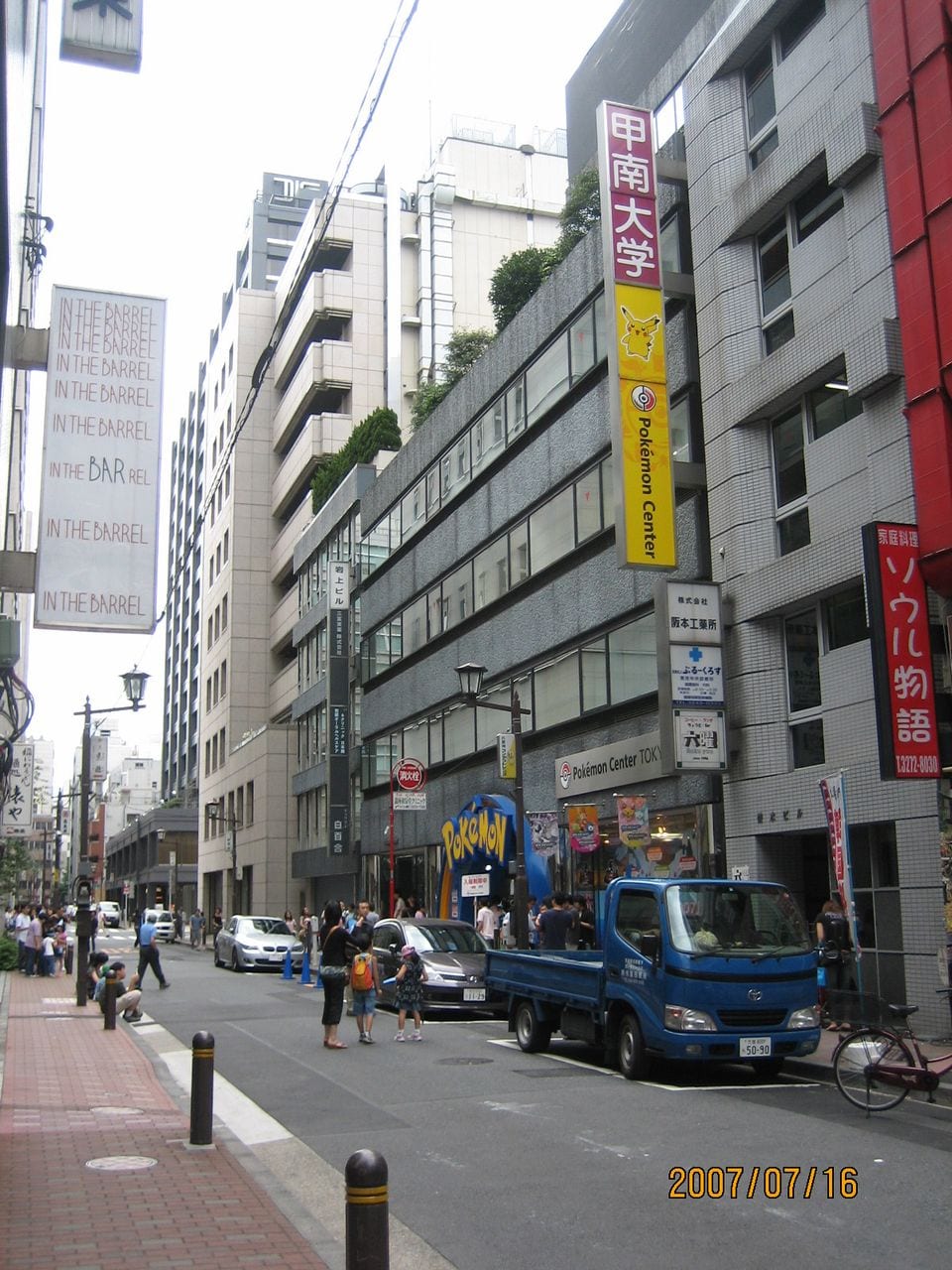
The starting point of The Pokémon Company was, unexpectedly, a store. According to the official history, in April 1998 "Pokémon Center Co., Ltd.," responsible for running stores, was established with joint investment from the three companies, and the same month it opened its first store, Pokémon Center Tokyo 5. The founding date in the company information is April 23, 1998, and its capital is 365.4 million yen 18.
Then in October 2000 it changed its name to The Pokémon Company and widened its field to brand management for Pokémon overall 5. Brand management means overseeing the whole so that separate products such as games, cards, anime and merchandise all look like the same "Pokémon." A note in the Nintendo conversation article describes The Pokémon Company as "established in 2000," but that is the year it changed its name; its predecessor was established in 1998 25.

What the shareholding does and does not tell us
On the ownership proportions of The Pokémon Company, the only primary source that can be checked is Nintendo's securities report. Nintendo's report for the 86th term (fiscal year ended March 2026) treats The Pokémon Company as an affiliate accounted for under the equity method and gives Nintendo's share of voting rights as 32% 6. The equity method describes a relationship in which a company does not control the affiliate as it would a subsidiary, but takes in part of its profit in its own results. One officer holds posts at both companies, and the report states that there are transactions between the two, "purchase of our products and contract manufacturing of products" 6.
An explanation often seen online is that "the three companies each hold 32%, and others hold the remaining 4%," but in this research no primary source was found showing Game Freak's and Creatures' holdings 6. This article treats only Nintendo's 32% as fact.
According to the same report, from the fiscal year ended March 2026 Nintendo began treating The Pokémon Company as a "significant affiliate," noting that its importance had grown 6. However, the financial information disclosed is the combined figure for the three equity-method affiliates including The Pokémon Company, with sales of a little over 1.1028 trillion yen 6. The sales of The Pokémon Company alone cannot be determined from this material.
Different sellers at home and abroad
There is also a division of labor in how the games are sold. Nintendo's report notes that Pokémon Pokopia, released in March 2026, is a title that The Pokémon Company releases and sells in Japan and Nintendo releases and sells overseas 6. Overseas, The Pokémon Company has a group that includes The Pokémon Company International and entities such as Pokémon Korea and those in Shanghai, Taiwan and Singapore 18.

Chapter 3The Design of Collecting and Trading: A Link Cable and Two Versions
Key points of this chapter
- Satoshi Tajiri's inspiration was the image of insects crawling back and forth along the Game Boy link cable 4
- In Red and Green the Pokémon that appear differ by version, and completing the Pokédex was premised on trading with the other version 16
- According to Tsunekazu Ishihara, after release link cables sold faster than Nintendo could produce them, and the purpose was trading Pokémon 1
The core of Pokémon play lies in collecting and trading, before it lies in fighting. This chapter looks at how that mechanism was built, through the words of those involved.
Insects crawling along a cable
In a 1999 TIME interview, Satoshi Tajiri said that when he learned of the Game Boy link cable he pictured insects crawling back and forth along the cable, and that this became his inspiration 4. The link cable is a peripheral that connects two Game Boys so they can exchange data. TIME sums up the idea as Pokémon's basic concept: collecting leads to trading between handheld consoles, and eventually spreads to trading among people who collect cards and figures 4.
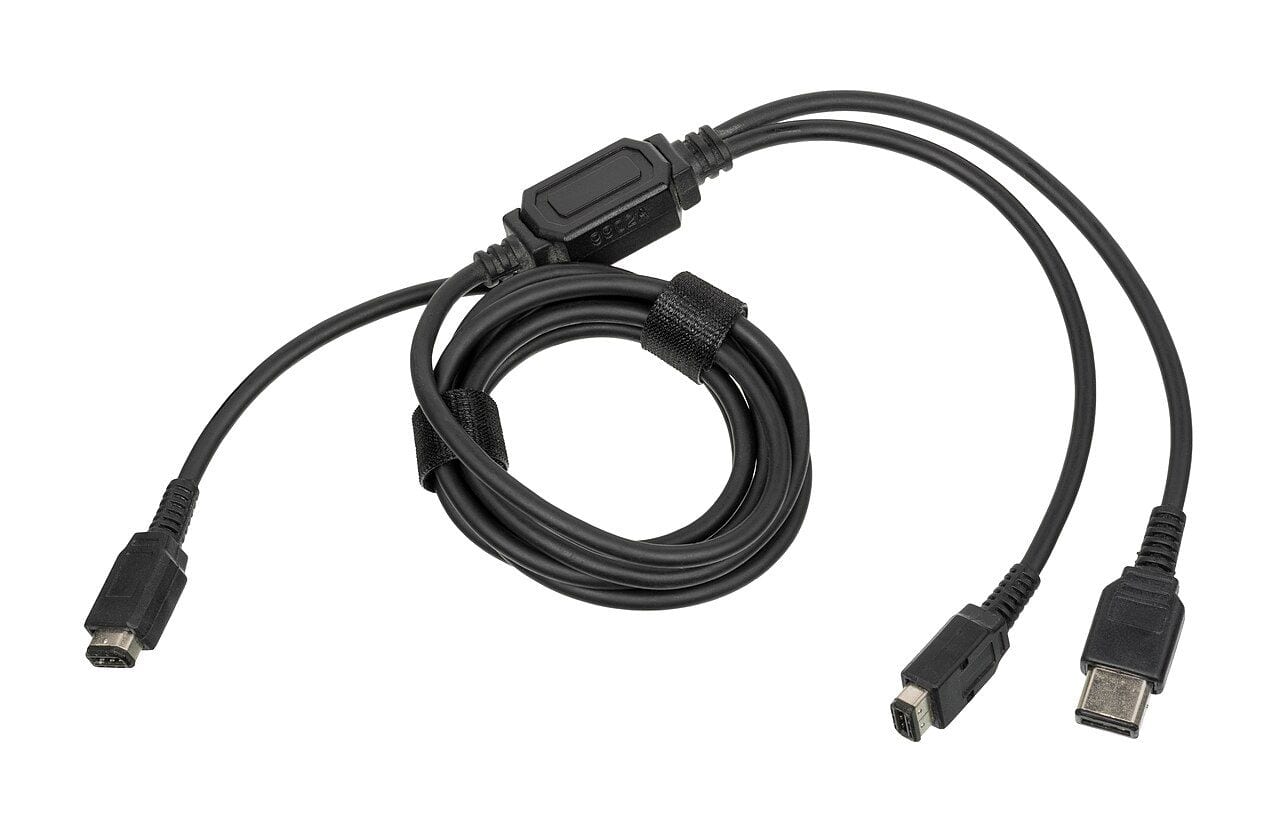

In a 2016 interview, Tsunekazu Ishihara explained that the link cable had originally been used for head-to-head play in Tetris, and that applying that mechanism to data communication for trading Pokémon was Tajiri's proposal 1. Ishihara also said that trading had to have meaning and value, and that making it a mechanism that was not "zero-sum," where one side gains only if the other loses, was the most important point Game Freak considered 1.
Two versions create "not enough"
At the center of that mechanism are the two versions. The Pokémon that appear differ between Red and Green, and completing the Pokédex was premised on trading with someone who had the other version 16. You cannot collect everything with your own cartridge alone. That "not enough" becomes a reason to talk to a friend.
On how the game came to be split in two, an English translation of a 1997 developer interview survives. According to it, Tajiri said he split it into two versions on Shigeru Miyamoto's advice, and Miyamoto thought not about sales but that it would be more fun if brothers could each have something different 22. However, the original publication has not been confirmed, and this article keeps to treating this as "reportedly so." In the same interview Tajiri said he had also considered an idea that would show how many people one had traded with, to encourage making friends 22.
Mew became a symbol of "trading"
Mew, whom we saw in Chapter 1, has also been discussed in connection with trading. TIME writes that Mew was included as the 151st among Pokémon officially said to number 150, and reports Tajiri's words that Mew cannot be obtained without trading 4. In the Nintendo conversation, on the other hand, it is explained that it was the programmer Morimoto who put Mew in, and that it began when something that should not appear in normal play showed up because of a bug 2. The two sources tell somewhat different stories about who put it in and with what intent. What is certain is that Mew was handed out through magazine campaigns and events, and that rumors about the "151st" spread 16.
The cables sold
How much Pokémon trading was played showed up in the sales of peripherals. According to Ishihara, after Red and Green came out, Game Boy link cables suddenly began to sell, so much that Nintendo could not keep up however many it made. Learning that buyers' purpose was trading Pokémon, Ishihara says he realized that trading was the center of play 1. Famitsu.com writes that the popularity of the Game Boy, which had calmed down about seven years after launch, was revived by Pokémon 16.
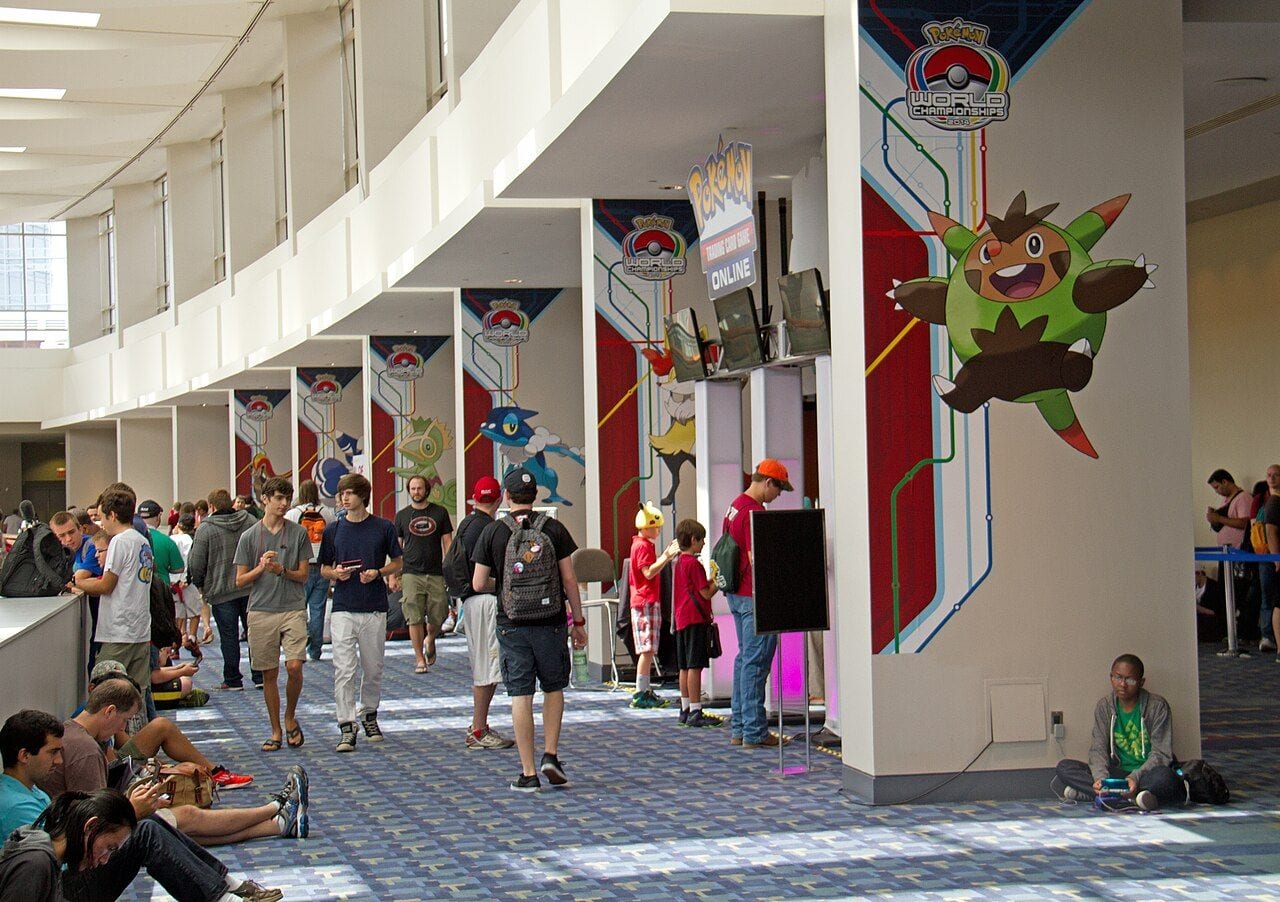
Trading and battling in Pokémon continued afterward. Gold and Silver was released in November 1999, and in August 2009 the official tournament Pokémon World Championships 2009 was held 5.

Chapter 4Expansion into Anime, Film and Cards
Key points of this chapter
- Eight months after the game's release, the card game began in October 1996, the TV anime in April 1997, and the first feature film in July 1998 510
- After the broadcast of December 16, 1997, 685 people were taken to hospital by ambulance across Japan. The cause was said to be a visual technique that used flashing light 11
- In response, NHK and the Japan Commercial Broadcasters Association drew up guidelines on visual techniques in April 1998, and TV Tokyo resumed broadcasting that month 11
Within about two years of the game's release, Pokémon spread to cards, anime, films and stores. The beginning of each can be confirmed in The Pokémon Company's official history 5.
The card game from October 1996
The Pokémon Trading Card Game was released on October 20, 1996, eight months after Red and Green, with the first expansion pack and the first starter pack going on sale together 10. Creatures handles development 5. The cards can be seen as making the Pokémon that were traded within the game tradable as paper cards one can touch.
As of the end of March 2026, cumulative production of the Pokémon Trading Card Game exceeds 85 billion cards, and it has been sold in 16 languages and more than 90 countries and regions 3. Note that this figure is the number "produced" as announced by the company, not the number sold.
Anime and film spread it beyond children
The TV anime Pocket Monsters began on TV Tokyo stations in April 1997 5. In April 1998 Pokémon Center Tokyo opened, and in November Pokémon Center Osaka, while in July the first feature films, Mewtwo Strikes Back and Pikachu's Summer Vacation, were released 5. As of the end of March 2026, the TV anime has aired in more than 190 countries and regions 3.
Publishers also helped the spread beyond games. According to TIME, Masakazu Kubo of Shogakukan recalled that at the time of release the Game Boy was seen as finished, and neither magazines, television nor toy companies showed interest. Amid that, Shogakukan decided to back Pokémon and went on to publish manga 4.
The broadcast incident of December 16, 1997
Pokémon's anime has an event that remains in the history of Japanese broadcasting. According to a report compiled in June 1998 by a study group of the Ministry of Posts and Telecommunications (now the Ministry of Internal Affairs and Communications), children who watched episode 38, broadcast on Tuesday, December 16, 1997, complained of symptoms such as seizures caused by flashing light 11. According to the Fire and Disaster Management Agency, by 5 p.m. the next day, the 17th, 685 people nationwide had been taken to hospital by ambulance and treated 11.
This episode was aired on six stations covering Hokkaido, Tokyo, Aichi, Osaka, Okayama and Kagawa, and Fukuoka, and its rating in the Kanto region was 16.5% (according to Video Research) 11. The cause was said to be the transmitted-light photography technique commonly known as "pakapaka," a strong flashing lasting several seconds 11. A research group of the Ministry of Health and Welfare reported that the images in question were flashes of red and blue 12 times per second 23.
Two misunderstandings should be addressed here. One is the claim that a particular character or move was the cause. The report names the visual technique as the cause, not a character 11. The other is the number of people. Figures such as "208 hospitalized" circulate, but what can be confirmed in Japanese primary sources is the 685 taken by ambulance, and the research group's estimate that roughly one in ten young people up to age 20 who were watching the program suffered health effects (including seizures) 1123.
Broadcasting rules changed
After the incident, the TV Tokyo network stopped broadcasting the program 11. According to the report, NHK and the Japan Commercial Broadcasters Association (JBA) jointly adopted "Guidelines on Visual Techniques in Animation and Similar Works" on April 8, 1998. TV Tokyo also set its own production guidelines the next day, the 9th, and resumed broadcasting Pocket Monsters on the 16th 11. It was a pause of about four months.
The report positions the incident as the first case that made society aware that visual expression can adversely affect the human body 11.
Chapter 5Going Overseas: North American Localization and "Pokémania"
Key points of this chapter
- Pokémon began game sales and anime broadcasts in the United States at the same time in September 1998, with the anime starting on 111 stations 5
- The film released in the US in November 1999 earned about $31.04 million over its opening weekend and took first place, and that same month Pokémon appeared on the cover of TIME 242512
- The dedicated overseas company began with Pokémon USA, established in 2001, and in 2009 the US and UK operations were combined into The Pokémon Company International 513
Pokémon went outside Japan two and a half years after its release in Japan. And the order in which it spread overseas differed from the order in Japan.
Pokémon sent games and anime to the US at the same time
According to The Pokémon Company's history, in September 1998 the Game Boy software Pokémon Red Version and Pokémon Blue Version was released in the United States, and the same month the TV anime Pokémon, I Choose You! began airing on 111 US stations 5. In Japan the anime began a little over a year after the game's release, but in the US the games and anime went out side by side from the start 5. That the first US release was Red and Blue rather than Red and Green is also a difference from Japan.
The official history records that the card game went on sale in the US in January 1999 5.
Delivered under changed names
To reach children overseas, Pokémon changed many of its names. According to TIME, the anime's protagonist Satoshi became Ash in the US, and his rival Shigeru became Gary 4. TIME writes that the protagonist's Japanese name is taken from Satoshi Tajiri and the rival's from Shigeru Miyamoto, who had been Tajiri's adviser 4.
Language support is still expanding. As of the end of March 2026, the Pocket Monsters game series supports 10 languages 3.
The "Pokémania" of 1999
Pokémon's popularity in the US reached its peak in 1999. The film Pokémon: The First Movie, released in the US on November 10, earned $31,036,678 over its first weekend, Friday to Sunday, playing in 3,043 theaters 2425. Its final US box office was $85,744,662 24.
Anime News Network at the time reported it as the first Japanese film to take first place in weekend box office in the US market, ahead of American films, and also said it set a five-day box office record for a film released outside the May to July summer period 25.
That same month, the November 22, 1999 issue of TIME put Pokémon on its cover and ran a feature, "Pokémania" 4. Guinness World Records recognizes this as "the first time a single video game franchise appeared on the cover of Time." Earlier covers had dealt with games, but with generic artwork or collages 12.
Building overseas companies
The vessel for overseas business was also put in place. Pokémon USA, Inc. was established in February 2001, and in March 2003 a representative office was set up in London 5. In April 2009, Pokémon USA in Seattle and New York and Pokémon UK in London merged their operations and came together under the name The Pokémon Company International (TPCi for short). Its president was Kenji Okubo, and it was announced that the company would handle brand management, licensing, marketing, the card game, anime and more in regions outside Asia 13.
How Pokémon games are released changed as well. Pokémon X and Y in October 2013 was the first in the series to be released worldwide at the same time 5. The order of releasing in Japan first and overseas after some delay had thereby disappeared.
Chapter 6Managing the Brand and Intellectual Property
Key points of this chapter
- The Pokémon Company explains that it advances projects together with licensed companies and partners, but does not publish its licensing procedures or criteria 26
- The terms of use on the official site say the site's data may be used only for personal enjoyment, and do not allow uses beyond personal use 27
- In September 2024 Nintendo and The Pokémon Company sued the developer of Palworld for patent infringement. As of October 2026, no report of a ruling can be confirmed 1528
Pokémon appears not only in games and cards themselves but also in products made by other companies, from plush toys to snacks. How does The Pokémon Company manage that spread?
Producing with Pokémon at the center
On "producing Pokémon," The Pokémon Company holds that the company exists for Pokémon, not Pokémon for the company 21. The same page lists bringing out the individuality of each of the more than 1,000 Pokémon, among other things, as pillars of its production 21.
On work with other companies, The Pokémon Company explains that it advances numerous projects and developments with tie-up partners and licensees (companies that make products with permission to use the property) 26. But the page does not say by what procedure or by what criteria permission is granted 26.
The line drawn by Pokémon's terms of use
What is closest to fans is the official site's "Terms of Use." The text, images and other data on the site may be used only for personal enjoyment, and use on public networks such as the internet is not permitted 27. Regarding derivative content based on Pokémon, not limited to submissions to the site, the terms provide that its creators and users grant The Pokémon Company, and parties such as Nintendo, Creatures and Game Freak, a non-exclusive, sublicensable, royalty-free, perpetual, irrevocable, worldwide license to use it 27. It then states expressly that this provision does not permit use of Pokémon property beyond personal use 27. It also does not accept unsolicited projects or ideas 27.
As for Pokémon, the editors found no official document from The Pokémon Company that sets out the scope of fan activity individually, as of October 25, 2026.
The Palworld lawsuit is a patent dispute
On September 19, 2024, Nintendo and The Pokémon Company announced jointly that they had sued Pocket Pair, Inc. in the Tokyo District Court for patent infringement. The suit, dated the previous day, the 18th, claims that the game Palworld, developed and sold by Pocket Pair, infringes multiple patents, and seeks an injunction against sales and damages 15. Nintendo said it will continue to take necessary measures against infringement of intellectual property, including its brands 15.
This lawsuit tends to be talked about as a copyright dispute over "similar characters," but as the wording of the announcement says, its basis is patent rights. According to reports, three patents are at issue, and the claim is for an injunction and payment of 5 million yen each to Nintendo and to The Pokémon Company, plus delay damages 28. This is the amount claimed, not an amount a court has awarded.
According to the same reports, in November 2025 the plaintiffs narrowed the object of their claim to older versions of Palworld. Pocket Pair changed the game's specifications in November 2024 and May 2025, and has taken the position that the changes were precautionary, that it does not infringe, and that the patents are invalid 28. There were also developments in the Patent Office's examination. It was reported that the Patent Office issued a notice of reasons for refusal in October 2025 on one of the applications divided off from the "monster capture" patent connected to the lawsuit 29. A notice of reasons for refusal is a document at the stage of asking the applicant for a rebuttal or amendment. It was then reported that for another divisional application in the same family, a notice of reasons for refusal was issued in April 2026 and a decision of refusal (the examiner's judgment not to grant the patent) in July, and that on September 3 Nintendo and The Pokémon Company filed an appeal against the decision of refusal, asking for that judgment to be reviewed 30. The result of the appeal has not yet come out.
Reports in June 2026 said that a technical briefing was scheduled for October 1 and a "disclosure of impression," in which the court indicates its view, for November 9 28. As of October 2026, no report that a ruling has been issued can be confirmed. The statements in this article are based on information up to that point.
The White House post, and who issued the statement
There are also cases where Pokémon was used in politics. On March 5, 2026, the official X account of the US White House posted an image parodying the title logo of the new game Pokémon Pokopia, with the words "make america great again" attached 31. Japanese reporting on it attributes the statement in its headline to "Kabu-Poke" (The Pokémon Company). In the body of the same article, however, it says that the one who responded to the New York Times was a spokesperson for The Pokémon Company International, which handles The Pokémon Company's overseas business, who explained that it was not involved in creating or distributing the image and had not permitted use of its intellectual property 31. Note that the headline and the body differ in who they say made the statement.
Chapter 7Influence on the Global Entertainment Industry
Key points of this chapter
- As of the end of March 2026, cumulative shipments of Pokémon-related game software are over 515 million, and cumulative card production over 85 billion 3
- Guinness World Records recognizes Pokémon as the "Best-selling media franchise" and estimates its total revenue at about $147 billion. The method of calculation is not shown 7
- Pokémon GO download figures differ between the company's 2019 "over 1 billion" and a research firm's estimate of "about 710 million" 3233
When we talk about how big Pokémon is, many numbers are cited. But those numbers mix company announcements, a certifying body's estimates and research firms' estimates. This chapter looks at what Pokémon left to the entertainment industry while separating where the numbers come from.
Figures Pokémon itself announces
In "Pokémon by the Numbers," The Pokémon Company publishes figures as of the end of March 2026. Cumulative shipments of Pokémon-related game software are over 515 million copies, cumulative production of the card game is over 85 billion cards, and the anime has aired in over 190 countries and regions 3. These are "shipped" and "produced" figures, not the number sold in stores or sales revenue. On The Pokémon Company's official site, no page giving sales for the brand as a whole was found in this research 3.
| Item | Figure | As of | Source |
|---|---|---|---|
| Cumulative game software shipments | 515 million or more copies | End of March 2026 | The Pokémon Company 3 |
| Cumulative card game production | 85 billion or more cards | End of March 2026 | The Pokémon Company 3 |
| Countries where the anime has aired | 190 or more countries and regions | End of March 2026 | The Pokémon Company 3 |
| Total revenue of the whole brand | About $147 billion (estimate) | April 2024 | Guinness World Records. The method of calculation is not shown 7 |
| Pokémon GO downloads | Over 1 billion | Reported August 2019 | A video by The Pokémon Company for Japan (as reported) 32 |
| Pokémon GO downloads | About 710 million (estimate) | July 2026 | Estimate by research firm AppMagic (as reported) 33 |
Shipment and production figures are not sales revenue. Download figures count downloads, which is different from the number of people playing.
Guinness's "Best-selling media franchise"
When talking about the scale of Pokémon, the Guinness World Records certification is often cited. But the record name is not "earned the most." Guinness's record title is "Best-selling media franchise," and the holder is Pokémon. Total revenue is estimated at about $147 billion, a figure said to be as of April 2024 7. It also says that about $102.9 billion of that is considered to come from merchandise 7.
However, the Guinness page does not show how this figure was calculated 7. It needs to be kept in mind that it is Guinness's estimate, not sales announced by The Pokémon Company. Also, the name of the record is "best-selling," and it is not a comparison of the size of profits.
Bringing a handheld console back to life
One of the effects Pokémon had on the industry was reviving a handheld console that was seen as nearing its end. As we saw in Chapter 1, at the time Red and Green was released, there was a feeling that the Game Boy was already finished 2. Famitsu.com writes that the popularity of the Game Boy, about seven years after launch, was revived by the arrival of Pokémon 16. Pokémon showed that even an old machine can gain new value depending on the design of play.
Pokémon GO and how to read the numbers
In July 2016, the smartphone game Pokémon GO began service 5. It is a location-based game in which you search for and catch Pokémon on a map of the real world. In August of that year Guinness World Records certified five records, including 130 million downloads in the month after launch and $206.5 million earned in the first month. The data were from the research firm SuperData 34. The research firm Sensor Tower estimates that in less than seven months after launch, its revenue in app stores worldwide passed $1 billion, the fastest in app store history 35.
Cumulative download figures differ greatly depending on the source. According to an August 2019 report, a promotional video that The Pokémon Company released for Japan showed "over 1 billion downloads" 32. On the other hand, a July 2026 report relaying an estimate by the research firm AppMagic puts cumulative downloads at about 710 million and in-app purchase revenue at about $6.37 billion 33. Both are counts of "downloads," not the number of people playing.
Beyond film and the screen
Pokémon also became a live-action blockbuster film. The Pokémon Company's history records that the Hollywood film Detective Pikachu was released in May 2019 5. According to the box office database Box Office Mojo, its worldwide gross is about $451.45 million 36.
Nintendo's financial results also hint at Pokémon's weight. From the fiscal year ended March 2026, Nintendo began treating The Pokémon Company as a "significant affiliate," noting that its importance had grown 6.
Chapter 8Limits and Criticism: Health, Quality, the Pokédex, and Resale
Key points of this chapter
- In the 1997 broadcast incident, a research group of the Ministry of Health and Welfare reported that about half of those who sought treatment had never before experienced a seizure 23
- For Scarlet and Violet, Nintendo apologized for problems with the game's operation in a December 2022 announcement about an update 14
- In 2023 The Pokémon Company declined purchases made for resale and urged caution about counterfeits and "searched" packs listed on flea-market apps 37
When a brand becomes as big as Pokémon, its effects are not all good. This chapter organizes, as far as can be confirmed, the criticism Pokémon has received and the problems the company itself has acknowledged.
Health: the first major problem
The broadcast incident of December 1997 that we saw in Chapter 4 was Pokémon's first major social problem. According to the report of the research group of the Ministry of Health and Welfare, more than 80% of those who sought medical care had seizure-like symptoms, and convulsions were 66.3% 23. It was also reported that about half of those who sought care had never before experienced any seizure symptoms 23.
The incident confronted makers with the danger of "flashing light," which had until then been hard to notice, and became the occasion for changing the rules of the whole broadcasting industry 11. The same report records that similar cases, on a smaller scale, were found later in another animated program on NHK 11. The problem was not Pokémon's alone; it was a danger common to the visual expression of animation at the time.
Criticism of the games' quality
In recent years, what stands out in criticism of Pokémon is the technical quality of the games. For Pokémon Scarlet and Violet, released in November 2022, operational glitches were reported one after another after release. In its December 1, 2022 announcement about an update (Ver. 1.1.0), Nintendo said it was aware of problems affecting the game's operation and apologized for the inconvenience 14. This apology was issued in Nintendo's name, not as a statement by The Pokémon Company alone.
Attention has also turned to working practices at the development site. In April 2022 Game Freak announced a system letting employees who wish to work a four-day week. The extra day off is unpaid, and employees raising children or caring for family are the main target 38. That report also touches on concern about the long working hours that are an issue in the game industry, but it contains no statement that Game Freak admitted to long working hours 38. This article too makes no definite claims about conditions at the development site.
The shrinking of the "National Pokédex"
The growing number of Pokémon has also caused problems. For Sword and Shield in 2019, it was announced that not all Pokémon from earlier in the series could be brought over, and only those listed in the new region's Pokédex would be included, which drew strong backlash from fans. Producer Junichi Masuda issued a statement on June 28, 2019, explaining that it was a difficult decision and saying that a Pokémon that cannot be used in one title does not mean it will not appear in future titles 39.
As we saw in Chapter 6, The Pokémon Company writes that the number of Pokémon exceeds 1,000 21. For play centered on collecting, the more there is to collect, the harder it is to fit everything into one game. It is an example of the appeal of collecting colliding with the burden on the makers.
Resale and counterfeits
The popularity of Pokémon cards has also produced the problems of resale and counterfeits. For "Pokémon Card 151," released in June 2023, The Pokémon Company announced that it firmly declines purchases made for profit, such as resale 37. It said that orders judged to be for resale at Pokémon Center Online may be canceled and use restricted, and, noting that counterfeit and imitation goods, and "searched" packs whose contents have been checked, have been found listed on flea-market apps, urged caution 37. In an announcement for a new product the following month it issued a similar notice, and said it would work with the operators of flea-market apps and others to build a place for trades people can feel safe about 40.
Criticism from religion
Overseas there was also criticism from a religious standpoint. According to a 2016 report relaying Reuters, in Saudi Arabia a religious opinion (fatwa) banning the Pokémon card game was issued in 2001, and in 2016 the secretariat of the Council of Senior Scholars was said to have presented it again. The reasons reportedly given were that Pokémon "evolution" is blasphemy promoting the theory of evolution, and that it amounts to gambling 41.
However, regarding the reports that in 2016 "the council issued this opinion anew," it was reported that an official at Saudi Arabia's Ministry of Culture and Information called them inaccurate, and that the council also said it had issued no opinion on the new smartphone game 42. This article has not been able to confirm primary reports or the original text of the 2001 opinion.
Sources
The small numbers in the text refer to this list. The access date is the day we last opened the source and checked its content.
- ポケモンが現実世界と仮想世界を繋いでいく、20年目の挑戦(石原恒和氏インタビュー)GameBusiness.jp, 2016-03-03PressAccessed 2026-10-25
- 社長が訊く『ポケットモンスター ハートゴールド・ソウルシルバー』第1回(岩田聡・石原恒和・森本)任天堂, 2009年ごろ(ページに日付なし)PrimaryAccessed 2026-10-25
- 数字でみるポケモン(2026年3月末現在)株式会社ポケモンPrimaryAccessed 2026-10-25
- Cover: Pokémania(Page 2)TIME Asia, 1999-11-22PressAccessed 2026-10-25
- あゆみ(設立について・ポケモンの歴史)株式会社ポケモンPrimaryAccessed 2026-10-25
- 有価証券報告書 第86期(2025年4月1日〜2026年3月31日)任天堂株式会社, 2026-06-25PrimaryAccessed 2026-10-25
- Best-selling media franchiseGuinness World RecordsOfficialAccessed 2026-10-25
- 会社概要株式会社ゲームフリークPrimaryAccessed 2026-10-25
- 会社概要・沿革株式会社クリーチャーズPrimaryAccessed 2026-10-25
- ポケモンカードゲーム 20th クロニクル株式会社ポケモンOfficialAccessed 2026-10-25
- 「放送と視聴覚機能に関する検討会」報告書 はじめに・第1章郵政省(現・総務省), 1998-06-26OfficialAccessed 2026-10-25
- First videogame on the cover of Time magazineGuinness World RecordsOfficialAccessed 2026-10-25
- Pokémon Merges North American, European OperationsWorld Screen, 2009-04-09PressAccessed 2026-10-25
- Pokémon Scarlet and Violet Patch Arrives With Bug Fixes, Nintendo ApologizesGame Informer, 2022-12-01PressAccessed 2026-10-25
- 株式会社ポケットペアに対する特許権侵害訴訟の提起について任天堂株式会社・株式会社ポケモン, 2024-09-19PrimaryAccessed 2026-10-25
- 『ポケットモンスター 赤・緑』30周年(今日は何の日?)ファミ通.com, 2026-02-27PressAccessed 2026-10-25
- ゲームフリークが本日(4月26日)設立30周年!ファミ通.com, 2019-04-26PressAccessed 2026-10-25
- 会社情報株式会社ポケモンPrimaryAccessed 2026-10-25
- 会社について株式会社クリーチャーズPrimaryAccessed 2026-10-25
- 「ポケモン」関連会社クリーチャーズの会長・石原恒和氏と社長・田中宏和氏が退任GameBusiness.jp, 2023-04-06PressAccessed 2026-10-25
- ポケモンのプロデュースとは株式会社ポケモンPrimaryAccessed 2026-10-25
- Pokémon 2(1997年の開発者インタビューの英訳)GlitterBerri, 2011-11-27SecondaryAccessed 2026-10-25
- 「放送と視聴覚機能に関する検討会」報告書 第3章(厚生省研究班の報告の概要)郵政省(現・総務省), 1998-06-26OfficialAccessed 2026-10-25
- Pokémon: The First MovieBox Office MojoSecondaryAccessed 2026-10-25
- Pokemon: The First Movie American Box Office ReportAnime News Network, 1999-11-16PressAccessed 2026-10-25
- ライセンス/タイアップ株式会社ポケモンPrimaryAccessed 2026-10-25
- ご利用についてポケットモンスターオフィシャルサイトPrimaryAccessed 2026-10-25
- 任天堂・株ポケの『パルワールド』訴訟、対象が「旧バージョンに限定された」との報道AUTOMATON, 2026-06-12PressAccessed 2026-10-25
- 任天堂、『パルワールド』関連特許で特許庁から“拒絶”GameBusiness.jp, 2025-10-31PressAccessed 2026-10-25
- 任天堂、拒絶査定された『パルワールド』関連特許に不服審判請求。査定内容に反論し、特許を受けられる発明であると主張GameBusiness.jp, 2026-09-12PressAccessed 2026-10-25
- 米国ホワイトハウスが『ポケモン』最新ゲーム利用した広報画像投稿で物議インサイド, 2026-03-06PressAccessed 2026-10-25
- Pokémon Go catches one billion downloadsPocketGamer.biz, 2019-08-01PressAccessed 2026-10-25
- Data digest: Pokémon Go turns 10(AppMagic の推計)Mobilegamer.biz, 2026-07-08PressAccessed 2026-10-25
- Pokémon Go catches five world recordsGuinness World Records, 2016-08-10OfficialAccessed 2026-10-25
- Pokémon GO Becomes Fastest Game to Reach $1 BillionSensor Tower, 2017-01SecondaryAccessed 2026-10-25
- Pokémon Detective PikachuBox Office MojoSecondaryAccessed 2026-10-25
- フリマアプリ等での強化拡張パック「ポケモンカード151」売買に関する注意喚起につきまして株式会社ポケモン(ポケモンカードゲーム公式), 2023-06PrimaryAccessed 2026-10-25
- Even The Studio Behind Pokémon Is Getting In On The 4-Day Work WeekKotaku, 2022-04-26PressAccessed 2026-10-25
- Pokemon Sword and Shield producer addresses National Pokedex dramaGematsu, 2019-06-28PressAccessed 2026-10-25
- 7月28日発売商品に関する取り組みと注意事項について株式会社ポケモン(ポケモンカードゲーム公式), 2023-07PrimaryAccessed 2026-10-25
- Saudi Arabian clerics declare Pokémon 'un-Islamic'(Reuters 配信)The Irish Times, 2016-07-20PressAccessed 2026-10-25
- Saudi Arabia denies issuing new fatwa against PokemonGulf News, 2016-07PressAccessed 2026-10-25
About the images
Images in this article are freely licensed photos from Wikimedia Commons, materials officially provided by rights holders, and photos from Pixabay. The source is shown under each image. The background art at the top of the page is a Pixabay illustration (AI-generated), shown in black and white.